
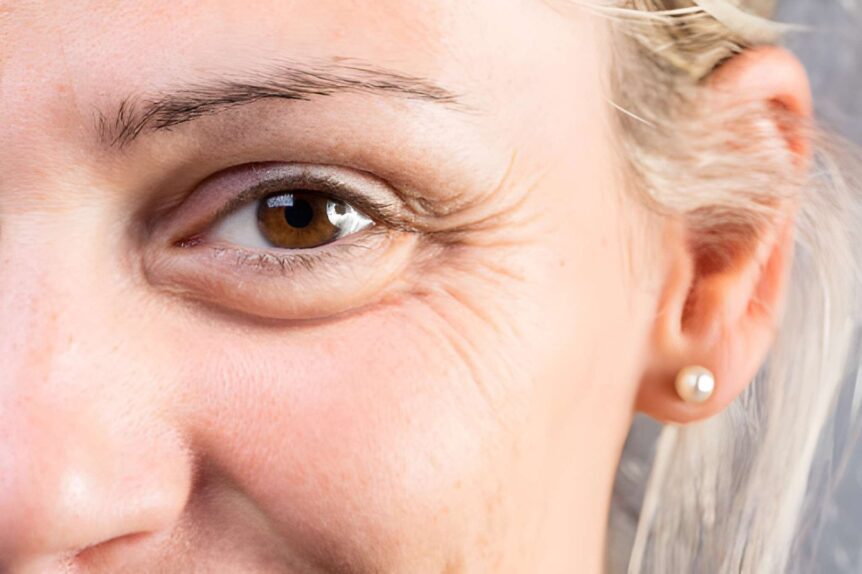
You catch it in ordinary light first.
Not a dramatic crease, not a sudden change. Just a faint line on the upper lid when you put on mascara, or a bit of crepey texture under the eye that seems to linger even when your face is at rest. Many people feel a small jolt when they notice eyelid wrinkles because the eye area draws attention so quickly. It can make you look more tired, older, or more stressed than you feel.
That reaction is understandable. The skin around the eyes is delicate, expressive, and under constant motion. It also ages differently from the cheeks, forehead, or jawline. The good news is that eyelid wrinkles are not a single problem with a single fix. They form for different reasons, and that means there are several ways to approach them thoughtfully.
Some people mainly need better daily protection. Some benefit from targeted topical care. Others do best with professional treatments that relax repeated muscle movement, improve skin texture, or support collagen renewal more directly. For readers who want a practical overview of eye-area aging, this guide on how to reverse eye aging in 3 simple steps offers a useful companion perspective.
A calm, informed plan usually works better than chasing the latest eye cream or assuming surgery is the only answer. The first step is understanding why this area changes so easily.
Why Eyelid Wrinkles Form So Easily
A common clinic moment goes like this: someone points to a new crease near the lash line or under the eye and says, “This showed up so fast.” In reality, eyelid wrinkles usually form the way a shirt sleeve develops wear at the cuff. The area is thin, in constant motion, and exposed to friction, light, and inflammation day after day.
The skin has very little margin for stress
The eyelids age early because the skin here is exceptionally thin and has less underlying support than areas like the cheeks. That means small changes in hydration, collagen, or elasticity are more noticeable sooner.
A useful way to understand it is to compare the eyelid to fine tissue paper and the cheek to a thicker fabric. If both are folded and stretched repeatedly, the thinner material shows lines first. The eyelid behaves the same way.
Repeated motion leaves a mark over time
Blinking alone happens constantly. Add smiling, squinting, focusing on screens, reacting to sunlight, and rubbing tired eyes, and the same small zones keep folding along familiar lines.
Early on, these creases may appear only with expression. Later, the skin rebounds less efficiently, so the fold begins to linger at rest. Patients often describe this as a line that “used to show only when I smiled.”
That difference matters because a movement-based wrinkle is not the same as a dryness line or a crease caused by swelling. The cause shapes the treatment plan.
Sun exposure weakens the support structure
Ultraviolet light breaks down collagen and elastin, which are the proteins that help skin stay smooth and spring back after movement. Around the eyes, people often avoid sunscreen because it can sting, water, or cause irritation when applied too close to the lash line. The result is a delicate area repeatedly exposed to light with little protection.
Squinting adds another layer. Bright light increases muscle contraction around the eyes, so UV exposure and repeated folding often happen together.
If you want a broader overview of habits that help protect aging skin before lines deepen, this guide on how to slow the signs of aging with 4 easy solutions provides practical context.
Anatomy affects where lines show up
Wrinkles around the eyes do not form in a single uniform pattern. Facial structure, muscle pull, skin quality, and even swelling patterns influence where creases first become visible.
A study documented distinct periocular wrinkle patterns and noted differences around both the inner and outer corners of the eyes in men and women, as described in the anatomical study on periocular wrinkles. In practice, that helps explain why one person develops fine, fan-like lines at the outer eye, while another notices a more defined fold under the lower lid or near the inner corner.
This is one reason copy-and-paste advice fails. Two wrinkles can look similar in the mirror but come from very different anatomical sources.
Some lower eyelid lines are driven by inflammation, not age
This is one of the most helpful distinctions to make early.
Dennie-Morgan lines are creases under the lower eyelids that are often associated with allergies, eczema, or chronic nasal and sinus congestion. They can appear long before typical age-related collagen decline becomes a factor. If the under-eye area is also itchy, puffy, dark, or frequently rubbed, I become more suspicious of inflammation than simple aging.
That changes the plan completely. A patient with allergy-related creasing may need trigger control, gentler skin care, and treatment of chronic inflammation before any cosmetic treatment will look worthwhile.
Why this matters for long-term treatment
Eyelid wrinkles usually result from several processes occurring simultaneously. Thin skin reveals change quickly. Repeated muscle motion etches lines. UV light weakens support. Inflammation keeps the area puffy and irritated. Age gradually reduces the skin’s ability to repair itself.
That is why quick fixes so often disappoint. Surface products can help with texture, and devices or injectables can soften certain lines. Still, the best long-term results usually come from matching the treatment to the driver and supporting the tissue itself. In regenerative care, therapies such as PRP and cell-based approaches are useful because they aim to improve skin quality and repair capacity over time, not just flatten a crease for the moment.
A simple summary helps:
- Thin eyelid skin shows change earlier than thicker facial skin.
- Repeated folding from blinking, smiling, and squinting turns temporary lines into persistent ones.
- UV exposure weakens collagen and elastin.
- Inflammation and allergies can create or worsen under-eye lines, including Dennie-Morgan folds.
- Collagen loss with age reduces the skin’s ability to bounce back.
- Regenerative treatment planning matters because lasting improvement depends on skin health, not only symptom control.
Daily Care and Prevention for Youthful Eyes
A good home routine will not stop time. Still, it can reduce unnecessary strain on the most delicate skin on your face, especially around eyelid wrinkles. Prevention matters because the area offers very little margin for rough habits.
Protect the skin before treating it
Sun protection is essential in eye-area care. If bright light makes you squint, you are creating repeated folding while also exposing thin skin to UV stress.
Practical protection usually works best when it is simple:
- Use mineral sunscreen carefully: Choose a formula that sits well around the orbital bone without stinging.
- Wear UV-blocking sunglasses: They shield the skin and reduce reflex squinting.
- Add a hat outdoors: This helps when the overhead light is intense.
Many readers looking for sustainable habits also find useful ideas in this guide on how to slow aging skin with 4 easy solutions.
Be gentler than you think you need to be
A surprising number of eyelid wrinkles are worsened by daily friction. Makeup removal, rubbing tired eyes, aggressive cleansing, and dragging cotton pads across the lid all add up.
Try this instead:
- Loosen makeup first with a gentle remover.
- Press, do not scrub when removing liner or mascara.
- Pat products on with the ring finger rather than rubbing them in.
- Pause before rubbing itchy eyes and ask why they are irritated.
That last point matters. According to Healthline’s overview of Dennie-Morgan lines, these lower eyelid creases may be associated with chronic allergies, eczema, or sinus issues. They may be accompanied by allergic shiners in people with atopic conditions. If your eye area is often itchy or swollen, controlling the irritation may help more than buying a stronger cream.
Support hydration and recovery
Hydration alone does not rebuild collagen, but dry skin shows lines more sharply. The eye area usually looks better when the skin barrier is calm and well supported.
Helpful basics include:
- A bland, fragrance-light eye moisturizer if you are sensitive
- Consistent sleep habits so puffiness and rubbing are less likely
- Steady water intake and a diet that supports general skin health
- Humidified air from indoor heating makes your skin tight and papery
Watch the habits that age the area
Some routines create more eye strain than people realize.
A few examples:
- Constant screen use can trigger squinting.
- Contact lens irritation can lead to rubbing.
- Sleeping in eye makeup can increase dryness and sensitivity.
- Harsh actives placed too close to the lash line can inflame the skin.
The best prevention plan is often boring. Protect from light, avoid friction, keep the barrier calm, and stay consistent.
Daily care will not erase deeper lines, but it creates better conditions for subsequent treatments.
Topical Treatments for Surface-Level Wrinkles
Eye creams are often marketed as if they can solve every problem around the eyes. They cannot. That does not mean they are useless. It means they need to be matched to the kind of eyelid wrinkles you have.
What topicals can do well?
Topical products are best for surface-level concerns. They can improve softness, hydration, mild texture irregularity, and the appearance of very fine lines. They can also support healthier skin over time when used consistently.
For many patients, the most realistic gains from a well-chosen product are:
- smoother feel
- less dryness
- less obvious creeping
- better makeup wear
- gradual improvement in overall skin quality
That is meaningful. It is just not the same as lifting tissue or relaxing overactive muscle movement.
Ingredients worth understanding
You do not need a long shelf of products. You need a few ingredients used properly.
Retinoids help encourage cell turnover and can support smoother-looking skin over time. Because the eyelid area is sensitive, they need careful placement and gradual use. If you are already using tretinoin or considering it, this article on how often to use tretinoin for wrinkles can help frame expectations.
Peptides are often included in eye products designed to enhance firmness and resilience. They tend to be easier to tolerate than stronger vitamin A products, though they are usually more subtle.
Antioxidants, including vitamin C in suitable formulations, help defend against environmental stress. Around the eyes, tolerance matters as much as potency.
Humectants and barrier-supporting moisturizers can make the quickest visible difference in crepey skin because dehydrated skin exaggerates every line.
What topicals cannot do well?
This is the key limitation. Creams cannot meaningfully remove excess skin, replace significant volume loss, or stop forceful muscle contraction at the outer eye. They also do not correct every crease that has become etched into the skin.
If your lines appear mainly when you smile or squint, a cream may soften the area, but it will not change the motion that causes the wrinkle. If the skin is lax, very thin, or heavily sun-damaged, topical care becomes supportive rather than dramatically altering appearance.
How to apply eye products without making things worse
Application technique matters as much as ingredient choice.
A few clinic-tested rules:
- Use a small amount.
- Stay on the orbital bone unless a clinician advises otherwise.
- Pat gently instead of dragging.
- Stop if the skin becomes red, itchy, flaky, or chronically irritated.
Topical treatment works best when used as maintenance, not as a rescue. It is part of a long-term skin quality plan, especially for early eyelid wrinkles and prevention-minded patients.
Non-Surgical Clinical Treatments for Deeper Rejuvenation
You look in the mirror after a full night of sleep, and the skin around your eyes still seems tired, folded, or crepey. At that point, the question changes. It is no longer, “Which cream should I try next?” It becomes, “What causes these lines, and which treatment matches that cause?”
That distinction matters around the eyelids more than almost anywhere else on the face. One person mainly has motion-related crow’s feet. Another has thin, dry, crinkled skin. Another has under-eye lines that worsen with rubbing, chronic irritation, or Dennie-Morgan lines related to allergy. These can look similar at a glance, but they do not respond to the same treatment.
Neurotoxins for crow’s feet and dynamic lines
If wrinkles appear mainly when you smile, squint, or scrunch your eyes, muscle activity is a major driver. Neurotoxins are often the most direct treatment for that pattern because they soften the repeated folding that keeps creasing the same spot.
The effect is temporary, but often very useful. The muscle gets a partial rest, and the skin is no longer being pinched hundreds of times a day with the same force. A simple comparison helps here. If you keep bending a sheet of paper along the same line, that fold becomes easier and easier to see. Dynamic wrinkles form similarly.
Neurotoxins are usually the best fit when:
- lines are strongest with expression
- The outer eye bunches during smiling
- The skin quality is still fairly good, but movement keeps etching the wrinkle
They are less helpful for papery texture, diffuse crepiness, or lower lid lines linked to inflammation, allergies, or skin thinning.
Facial peels for rough texture and superficial change
Peels address a different layer of the problem. They work at the surface, helping rough, dull, uneven skin shed damaged outer cells so the area appears smoother and reflects light more evenly.
Around the eyes, restraint matters. Eyelid skin is delicate, and a clinician must carefully choose peel strength, placement, and contact time. The goal is controlled renewal, not aggressive stripping.
This option makes the most sense when the problem is mainly surface quality:
- mild roughness
- dull tone
- very fine lines that look worse because the skin is dry or sun-worn
Peels can refresh the area, but they do not rebuild deeper support on their own. For deeper eyelid wrinkles, they are usually part of a layered plan rather than the whole plan.
PRP for skin quality, repair signaling, and longer-term support
PRP, or Platelet-Rich Plasma, deserves special attention because it shifts the conversation from symptom control to tissue support. Instead of only relaxing a muscle or polishing the surface, PRP uses concentrated components from your own blood to encourage repair signaling in the treated skin.
That regenerative angle is especially appealing around the eyes. This skin is thin, prone to dehydration, and slow to bounce back once collagen declines. In the clinic, patients often choose PRP when they are less bothered by a single line and more by the overall appearance of the area: fragile, creased, hollow-looking, or tired.
A useful way to understand PRP is to compare it with tending poor soil rather than painting over a cracked wall. One approach hides the problem for a while. The other aims to improve the condition of the tissue so it functions better over time.
PRP is often a strong option for patients who say:
- “The skin looks thin.”
- “My under-eyes look crepey, even when I am not smiling.”
- “I want healthier skin quality, not just less movement.”
- “I want a treatment that uses my own biology.”
If you want more details on that approach, this guide explains how platelet-rich plasma can work under the eyes.
PRP also fits well with a more careful diagnostic mindset. For example, if lower lid lines are being worsened by allergy rubbing or chronic inflammation, the answer is not to keep piling on surface treatments while ignoring the trigger. You treat the tissue, but you also identify what is repeatedly stressing it.
Comparing non-surgical eyelid treatments
| Treatment | Primary Target | How it helps | Best For |
| Neurotoxins | Dynamic crow’s feet | Softens repeated muscle contraction that folds the skin | Lines that appear with smiling, squinting, or blinking |
| Facial peels | Surface texture | Improves roughness, dullness, and superficial irregularity | Mild texture change, uneven tone, and very fine surface lines |
| PRP | Skin quality and tissue support | Encourages repair signaling and collagen-related renewal | Crepey texture, thin-looking skin, and patients seeking a regenerative approach |
How clinicians often combine them
Many patients do best with combination treatment because eyelid aging rarely results from a single cause.
A patient with strong crow’s feet and otherwise healthy skin may start with neurotoxin. A patient with thin, crinkled under-eye skin may benefit more from PRP. Someone with mild roughness and early texture change may improve with a carefully selected peel. If the pattern includes allergy-related lower lid creases, the plan should also address irritation and rubbing, or results will be limited.
The best outcomes usually come from matching the treatment to the mechanism. Movement needs one strategy. Surface damage needs another. Tissue weakness and declining skin quality often respond best to regenerative care that aims to improve the skin itself, rather than just mask the wrinkles.
Advanced Biological Regeneration with Cell Therapy
There is another way to think about eyelid wrinkles. Instead of asking only, “What can I do to this small area?” some patients ask, “How can I support healthier aging overall so my skin quality improves more naturally over time?”
That is where Cell Therapy enters the discussion as a broader regenerative strategy.
Why local treatment is not always enough
A line near the eye may look like a minor cosmetic issue, but it sits within a larger picture of aging. Skin quality reflects more than surface care. It is shaped by inflammation, recovery capacity, endocrine balance, connective tissue resilience, and the body’s ability to maintain itself over time.
That distinction matters. A person can have less heaviness after surgery and still feel bothered by the skin’s quality.
A whole-body approach to skin resilience
Cell Therapy is different from a localized cosmetic procedure. It is used as a cell-based anti-aging treatment designed to support the body’s broader restorative processes. Patients often seek it as part of a larger wellness plan focused on vitality, recovery, connective tissue support, and a more natural-looking aging process.
From a skin perspective, the appeal is straightforward. Healthier tissue function at the systemic level can complement what you do locally. When patients feel better supported overall, they often also want their visible aging plan to reflect that same philosophy.
This can be especially appealing to adults who:
- prefer non-surgical anti-aging strategies
- want a more natural-feeling result
- view skin as part of general wellness, not a separate cosmetic problem
- are interested in annual maintenance rather than a one-time “fix”
How it fits with regenerative aesthetics
Cell Therapy is not a replacement for every local treatment. If a patient has strong dynamic crow’s feet, movement still matters. If the skin is sun-damaged, direct skin treatment remains valuable. If there is allergy-related irritation, inflammation must still be addressed.
Where Cell Therapy becomes interesting is in the background support it may offer. It can be thought of as foundational care, while other treatments handle visible, targeted concerns.
Some readers exploring advanced regenerative concepts also come across discussions like this article on exosome therapy and how it works. The broader idea is similar in spirit, even when the methods differ. Skin often responds best when local procedures are paired with a bigger-picture view of tissue health.
The most satisfying anti-aging plans usually do two things at once. They improve what you see in the mirror, and they support how your body maintains itself over time.
For the right patient, that combination feels more sustainable than constantly chasing the next symptom.
What to Expect and When to Consult a Specialist
You may notice this first in ordinary moments. You wash your face, look in the mirror, and the lines around your eyelids are still there, even after moisturizer. That usually means the question is no longer, “Do I need a better cream?” It is, “What causes these lines?”
Results with eyelid wrinkles usually come in layers. Surface dryness can improve within days to weeks, especially if you reduce irritation and protect the skin barrier. Fine texture changes often take longer. Structural changes, such as creasing from repeated muscle movement or thinning of the skin, usually require more than home care.
A useful way to judge progress is to look for changes in this order: less stinging and dryness first, smoother texture second, softer lines third. That sequence helps many patients stay realistic. Skin often gets healthier before it looks dramatically younger.
Topicals work best for early, shallow change. They can improve hydration, reduce roughness, and make fine lines look less obvious. Deeper folds, crepey laxity, and lines that remain visible at rest usually point to a deeper issue in the skin, the muscle activity underneath it, or ongoing inflammation.
Professional treatment becomes more helpful once the cause is clear. Dynamic wrinkles from blinking and squinting often respond well to neurotoxins for a few months, as noted earlier. If the skin also looks thin, papery, or slow to recover, regenerative treatments such as PRP or Cell Therapy may be part of the discussion, as they aim to support skin quality over time rather than just quiet a visible line for a short period.
That distinction matters.
Some eyelid lines are not mainly age-related. A specialist may notice clues that patients often miss, such as chronic rubbing, eyelid eczema, or Dennie-Morgan lines, which are linked to allergies. Those lines can mimic premature aging, but the treatment plan changes if inflammation drives them. In that setting, treating only the wrinkle is like repainting a wall while a leak is still active behind it.
Signs it is time to get expert guidance
Consider seeing a qualified specialist if:
- Your lines stay visible when your face is fully relaxed. This can suggest collagen loss, skin thinning, or fixed creasing rather than simple dryness.
- You have itching, puffiness, or recurring irritation. That pattern raises the possibility of allergy-related folds, dermatitis, or chronic rubbing.
- Products keep causing burning or redness. Sensitive eyelid skin often needs a more precise plan, not stronger products.
- The skin looks crepey or less elastic. That often responds better to in-office treatment than to topical care alone.
- You want a longer-term strategy. A coordinated plan can combine symptom relief with regenerative support for skin health.
Choose a provider who examines the pattern, not just the wrinkle. A careful consultation should cover when the lines appear, whether they worsen with smiling or squinting, any history of allergies or eczema, your current products, and your goals. That is how a clinician separates dehydration lines, expression lines, inflammatory folds, and true tissue thinning.
The safest plans are usually the most personalized. Some patients need simple changes to their skin care regimen. Others benefit from a combination of targeted treatment for movement-related lines and regenerative support, such as PRP or Cell Therapy, to improve the quality of the tissue itself.
This article is for educational purposes only and is not a substitute for advice from your own physician. Talk with a qualified clinician and your personal doctor before making treatment decisions.
If you are ready to explore a personalized, non-surgical approach to eyelid wrinkles and broader rejuvenation, International Clinic of Biological Regeneration offers consultations focused on long-term skin quality, vitality, and natural-looking anti-aging care. Their programs include Cell Therapy, PRP, IV infusions, and facial peels, with treatments provided at clinic locations in Mexico and The Bahamas.