
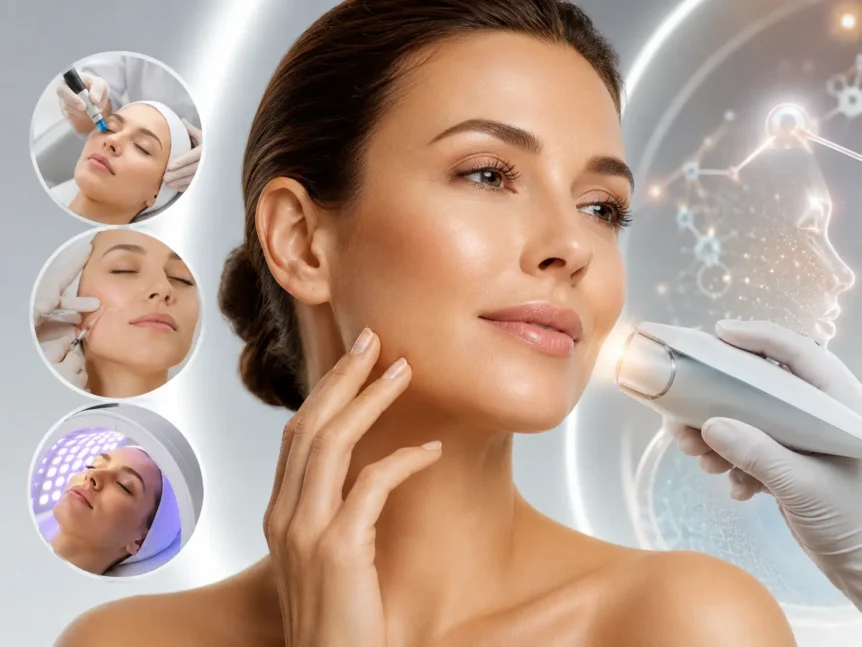
A lot of people arrive at the same moment in front of the mirror.
They notice that their face still looks like them, but something has changed. The skin may seem thinner, less bright, or less firm. Makeup may sit differently. Smile lines may linger longer after the smile is gone. Then the search begins, and it gets confusing fast. Peels, lasers, microneedling, PRP, injectables, surgery, and newer regenerative options all start to blur together.
That confusion is understandable. Interest in these treatments has grown far beyond a small cosmetic niche.
Your Guide to a More Youthful Appearance
A common story goes like this. Someone starts by buying stronger creams. Then they book one treatment that promises a glow. After that, they hear about fillers from a friend, lasers from a coworker, and PRP from social media. None of those options is automatically wrong, but without a clear framework, it becomes hard to know what each one does.
Many individuals are not seeking a dramatic transformation. They want to look rested, healthy, and more like themselves again. They want better tone, softer lines, smoother texture, and a face that reflects how they feel inside.
What makes this topic confusing
Skin rejuvenation techniques don’t all work on the same problem. Some mainly improve the surface. Others stimulate repair deeper in the skin. Some relaxed muscle movement creates expression lines. A few approaches take a broader view and try to support vitality from within, with the idea that healthier systems can support healthier-looking skin.
That difference matters because a treatment that works well for discoloration may do very little for sagging. A treatment that improves texture may not restore volume. And a treatment that delivers rapid results may not be the one that best supports long-term skin quality.
Good decisions start with a simple question: what exactly are you trying to improve, texture, tone, lines, laxity, volume, or overall vitality?
A calmer way to choose
The best approach isn’t to chase whatever is popular. It’s to match the technique to your concern, comfort level, and recovery tolerance.
A reader in their forties with early texture changes may do well with a peel or microneedling plan. Someone with deeper etched lines may need resurfacing or wrinkle-relaxing treatment. Someone who feels their skin looks tired because they feel tired may want to think beyond the skin alone.
Skin rejuvenation is at its best when it feels thoughtful, not rushed. The goal isn’t perfection. It’s clarity, confidence, and a plan that makes sense for your face and your life.
How Skin Ages and How Rejuvenation Helps
Skin aging feels complicated until you reduce it to a few basic changes. Think of youthful skin as a well-made mattress. It has spring, support, even padding, and a smooth top layer. Over time, that structure starts to wear. The outer surface gets rougher, the inner support weakens, and repeated facial movement can crease the fabric in the same places.
Sun exposure, time, stress, and slower cell turnover all contribute. Collagen and elastin, which help skin stay firm and flexible, gradually decline. Skin can also lose moisture balance and radiance. If you’d like a broader wellness view of how aging affects tissues over time, this overview on what science says about cell health and aging offers useful context.
The three-part framework that makes treatments easier to understand
| Approach | What it targets | Examples |
| Resurface | Uneven texture, dullness, discoloration, shallow lines | Peels, laser resurfacing |
| Rebuild | Loss of firmness, mild laxity, thinning support | Microneedling, RF microneedling, PRP |
| Relax | Expression lines caused by repeated movement | Botulinum toxin treatments |
This framework helps because many treatments are described in marketing language rather than plain language. Once you know the job, the treatment starts to make more sense.
Resurface, rebuild, relax
Resurfacing treatments primarily work on the upper layers of the skin. They try to remove damaged surface cells and encourage fresher skin to appear. These are often chosen for sun damage, rough texture, enlarged pores, and uneven tone.
Rebuild treatments focus on structure. They create controlled stimulation in the skin, prompting the body to lay down more supportive tissue over time. That usually means gradual improvement, not overnight change.
Relax treatments reduce the pull of facial muscles that crease the skin repeatedly. Forehead lines and crow’s feet are the classic example.
If a treatment promises to fix every aging concern at once, be cautious. Most good treatments do one main job well, and many plans work best when they combine methods.
Why combination plans are common
A person can have surface damage, structural thinning, and movement-based lines simultaneously. That’s why one treatment often helps, but doesn’t solve everything.
This is also why skin rejuvenation techniques should be chosen with patience. You aren’t just treating “aging.” You’re addressing several different changes that happen together, each with its own best tool.
A Guide to Non-Surgical Skin Rejuvenation
Non-surgical options are where most individuals begin, and for good reason. They usually involve less downtime, less disruption, and a more gradual change that can look very natural. The key is understanding what each category feels like and what kind of result it tends to support.
Surface-focused options
Chemical peels remove damaged outer layers of skin to improve tone and texture. Some are very light and leave you looking a bit pink or dry for a short period. Others are more intensive and require a longer recovery. People often choose peels for dullness, sun damage, and uneven skin texture. If you’re curious about this category, a page on facial peels and their role in skin renewal provides a practical overview.
Laser resurfacing is another resurfacing approach. Different lasers target different concerns, but in general, resurfacing lasers help with fine lines, sun-related changes, and textural irregularities.
Collagen-building treatments
Microneedling is popular because the idea is simple. Tiny needles create controlled micro-injuries, and the skin responds by repairing itself. Patients usually think of it as a texture- and refinement-based treatment, especially for early signs of aging and some forms of scarring.
RF microneedling goes further by combining needling with heat energy.
A few practical points matter here:
- Experience during treatment: Patients typically describe microneedling treatments as tolerable, especially when topical numbing is used.
- Downtime: You can expect temporary redness and a sunburn-like look for a short period.
- Results: Improvement tends to be gradual because collagen remodeling takes time.
Injectable non-surgical options
Some injectable treatments focus on muscle movement. Others focus on volume. PRP sits in a different lane. It is often used as a supportive regenerative option intended to improve skin quality and healing response.
A person in their early forties with a crepey texture might prefer collagen stimulation first. A person with prominent frown lines may care more about muscle-related lines. Someone with hollowing in the cheeks or under the eyes may need a volume discussion rather than a texture treatment.
Non-surgical doesn’t mean simple. It means the treatment should be matched carefully to the concern.
How people usually choose
Many patients narrow their options by asking four questions:
- What bothers me most? Tone, lines, pores, laxity, or loss of volume.
- How much downtime can I accept? A weekend matters to some people. For others, a longer reset is fine.
- Do I want fast change or gradual change? Some techniques act quickly, others build over time.
- Do I want to maintain or correct? Prevention and repair often call for different choices.
Used well, non-surgical skin rejuvenation techniques can refresh the face without making it look altered. That is why they remain the starting point for so many people.
Understanding Surgical Rejuvenation Options
Surgical rejuvenation belongs in the conversation because it solves a different class of problem. When skin laxity is pronounced, when jowling is advanced, or when eyelid heaviness is significant, surgery may do what non-surgical treatment cannot. A facelift, neck lift, or eyelid procedure doesn’t mainly improve skin texture. It repositions or removes tissue to address structural sagging.
That distinction is important because many readers treat surgery and non-surgical treatment as interchangeable. They aren’t. Surgery can create a larger anatomical change, but it also demands a very different level of commitment, including anesthesia, recovery time, and a willingness to accept the risks and permanence that come with an operation.
What surgery does well
Surgery is usually strongest when the issue is tissue descent rather than surface quality. If the main complaint is loose skin under the jawline or significant upper eyelid hooding, a resurfacing treatment alone won’t fully correct it.
Why do some people still prefer non-surgical care
For many adults, the appeal of non-surgical care isn’t only medical. It’s personal. They want subtle improvement, not a major event. They don’t want to disappear for recovery. They also want the flexibility to adjust their plan over time as their needs change.
A balanced view looks like this:
- Choose surgery when the main issue is significant sagging or excess tissue.
- Choose non-surgical options when the goals are refinement, maintenance, moderate tightening, texture improvement, or a more gradual change.
- Combine carefully when both structure and skin quality need attention.
Surgery changes position and contour. Non-surgical care often improves skin quality, movement-related lines, and early to moderate laxity.
Neither path is morally better or more serious. They answer different questions.
A Systemic Approach to True Rejuvenation
Most discussions of skin rejuvenation stay on the face itself. That makes sense, because the face is what we see. But many people recognize another truth before they ever book treatment. When they feel run down, inflamed, hormonally off balance, or depleted, their skin often reflects it.
That observation has led some clinics and patients to adopt a more systemic approach to rejuvenation. Instead of asking only how to smooth or tighten the skin from the outside, they ask how to support the body’s broader restorative processes so the skin has a better foundation.
Why this perspective matters
A purely surface-based plan can be very effective, especially for visible signs like roughness or fine lines. But it may not fully address the “tired look” caused by low vitality, chronic stress, or internal imbalance. Skin often looks best when circulation, recovery, sleep, and hormonal steadiness are also being supported.
Inside-out support versus surface correction
An inside-out approach doesn’t replace every local treatment. It changes the order of thinking.
Instead of asking, “Which device should I use first?” a person may ask:
- How is my overall vitality right now?
- Do I seem puffy, inflamed, or depleted?
- Am I trying to look fresher while ignoring the reasons I feel worn down?
- Would a broader wellness plan make my aesthetic results feel more natural?
Some people are especially drawn to this model if they want a less artificial-looking result, or if they care as much about energy and resilience as they do about appearance. Supportive education on balancing hormones naturally can also help readers consider how internal health patterns affect the face over time.
The skin is not separate from the person wearing it.
A more realistic definition of rejuvenation
True rejuvenation isn’t always about looking dramatically younger. Often it’s about looking more alive, more rested, and more in sync with how you want to feel.
That may include peels, PRP, or collagen-focused treatments. For some adults, it also means considering regenerative programs designed to support immune balance, endocrine steadiness, and overall vitality. Used thoughtfully, this broader lens can make surface treatments work more coherently, shifting the goal from cosmetic correction alone to whole-person renewal.
Building Your Personalized Rejuvenation Program
The most sensible rejuvenation plan usually isn’t built around one heroic treatment. It’s built around layers. One layer improves texture. Another supports collagen. Another addresses overall vitality and recovery. When those layers make sense together, results tend to look more balanced and easier to maintain.
Start with the concern, not the trend
A personalized program begins with what you see and feel.
If your skin looks rough but still feels firm, surface renewal may be enough. If your skin is smoother than it used to be but has lost resilience, structural support becomes more relevant. If you look tired in a way that seems bigger than the skin itself, a more systemic wellness approach may deserve attention.
A practical planning sequence often looks like this:
- Clarify the main complaint
Is it dullness, lines, laxity, uneven tone, or a general loss of vitality? - Choose the foundation
Some people build around regenerative or wellness-focused care. Others begin with a peel or collagen-stimulating treatment. - Add a complementary treatment
PRP may pair well with collagen-focused skin care. Peels may pair well with maintenance plans aimed at a smoother texture. - Decide on pacing
Slow, layered improvement is often easier to live with than aggressive correction all at once.
How combined planning can work in real life
Think of the face as needing both polish and support. A peel may improve the appearance of the surface. PRP may support a regenerative response in the skin. A broader anti-aging program may focus on helping the person feel stronger and more resilient overall.
That combination is often more satisfying than repeating one treatment that only solves one part of the problem.
A few reminders help keep expectations grounded:
- Personal biology matters: Two people with similar ages can respond very differently.
- Lifestyle still shows on the skin: Sleep, stress, and sun habits can support or undermine progress.
- Maintenance is normal: Rejuvenation is usually an ongoing relationship with your skin, not a one-time event.
If you’re wondering when preventive care starts making sense, this article on when to start using anti-aging products is a helpful companion to treatment planning.
A good program should feel sustainable. If it doesn’t fit your life, you probably won’t maintain it.
What to ask in a consultation
Bring goals, not treatment names. Say what bothers you, how much downtime you can handle, and whether you want gradual or faster change. A thoughtful clinician can then help sort out which combination of skin rejuvenation techniques fits your face, your health picture, and your comfort level.
Frequently Asked Questions About Skin Rejuvenation
When should someone start skin rejuvenation treatments?
There’s no perfect age. Some people start early with preventive skin care and light treatments to maintain what they have. Others begin later when changes in tone, texture, or firmness become harder to ignore. The right time is usually when a concern becomes consistent enough that you’d like professional help, not when someone else says you’re “old enough.”
Can treatments be combined safely?
Often, yes, when they’re chosen and sequenced by an experienced clinician. Combining treatments is common because one method may improve texture while another supports firmness or overall skin quality. The key is not stacking procedures casually. Timing, skin sensitivity, and healing capacity all matter.
Is PRP part of anti-aging care or just a trend
PRP is commonly used as a supportive regenerative treatment in anti-aging programs, especially when the goal is to improve skin quality in a more natural-feeling way. If you want a practical overview, this article on whether PRP helps with anti-aging is a useful place to start.
Should I choose surface treatment or systemic support
Sometimes the answer is both. If your concerns are mainly visible and local, a peel, laser, or collagen-focused treatment may be the logical first step. If you also feel depleted or out of balance, a broader rejuvenation strategy may be worth discussing with a qualified clinician and your own doctor.
If you’re exploring non-surgical anti-aging options and want a broader inside-out perspective, International Clinic of Biological Regeneration offers educational resources and customized programs centered on Cell Therapy, PRP, IV infusions, and facial peels at clinic locations in Mexico and The Bahamas. Our team has worked with adults seeking natural-feeling rejuvenation since 1981.
This information is for educational purposes only and isn’t a substitute for medical advice from your own physician. Talk with an ICBR clinician and your personal doctor to decide what approach may be appropriate for you.