
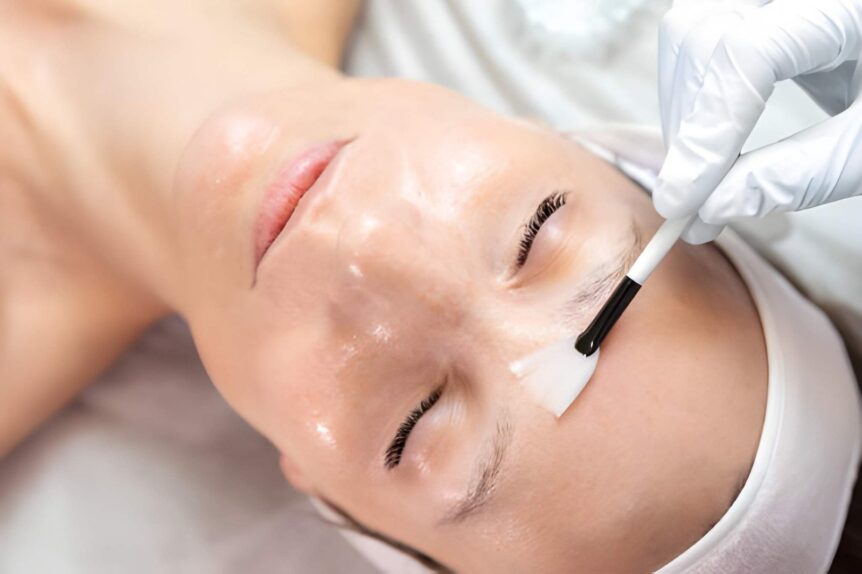
When you start looking into facial peels, one of the first questions is always about the price. The truth is, the cost can swing pretty widely. You might see a light, superficial peel for as little as $150, while a deep, intensive treatment could run over $2,000. This big range makes sense when you understand what goes into each type of peel.
What Is the Average Facial Peel Cost
The key to understanding facial peel costs is knowing that they are not all the same. Peels are broken down into three main levels: light, medium, and deep. Each one has a different price tag, a different recovery time, and is designed to achieve different results.
Think of a light peel as a quick refresh for your skin. On the other end, a deep peel is a serious clinical procedure meant for significant skin renewal.
This visual guide gives you a quick snapshot of what to expect for each level.
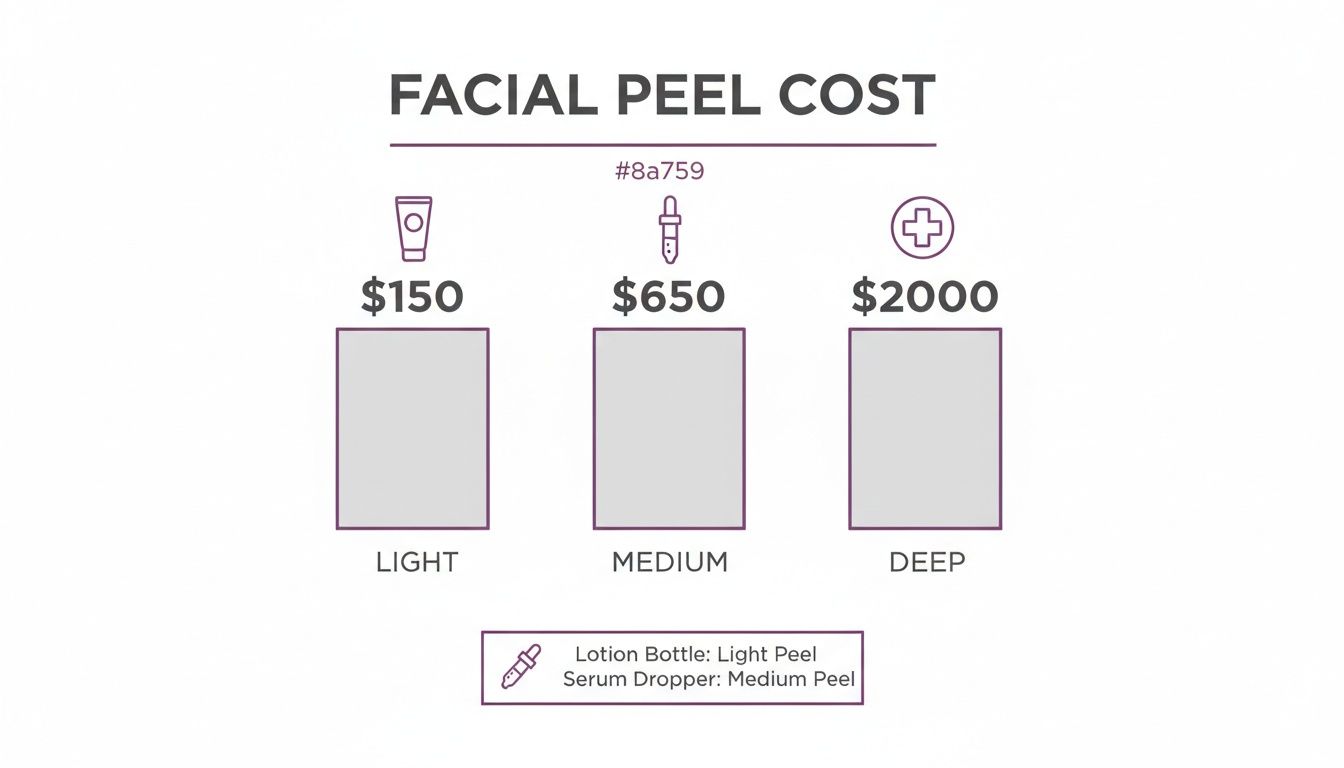
As you can see, the investment goes up with the intensity of the peel. This reflects not just the strength of the solution but also the level of expertise and clinical oversight required to perform it safely.
Comparing Peel Types by Cost and Purpose
The amount you will invest in a facial peel is directly linked to how deep it goes. Each level targets different layers of the skin to tackle specific issues, from dullness and minor texture problems to more stubborn signs of aging.
Here is a simple breakdown:
- Light Peels: These are the most budget-friendly, typically costing between $100 and $300. Using gentle acids like salicylic or glycolic acid, they exfoliate just the outermost layer of skin. There is little to no downtime, making them perfect for boosting brightness and tackling minor imperfections.
- Medium Peels: This is a step up, with prices usually falling between $500 and $1,500. These peels use stronger acids, like TCA, to reach deeper into the skin. They are great for addressing fine lines, moderate sun damage, and uneven skin tone. Expect a few days of redness and peeling as your skin recovers.
- Deep Peels: Representing the most significant investment, these peels can cost anywhere from $2,000 to $3,000 or more. Powerful agents like phenol are used to penetrate the lower layers of the skin to correct deep wrinkles, significant sun damage, and even some scars. The results can be dramatic, but they require a longer recovery period and should only be performed by highly experienced clinicians. To see how we approach these treatments, you can learn more about ICBR’s facial peel services.
To give you a better idea of what to expect, the table below summarizes the key differences between each peel type, including typical costs and downtime.
Facial Peel Cost at a Glance
| Peel Type | Average Cost (USD) | Typical Downtime | Best For |
|---|---|---|---|
| Light Peel | $100 – $300 | 0-2 days | Brightening dull skin, minor texture issues |
| Medium Peel | $500 – $1,500 | 3-7 days | Fine lines, moderate sun damage, uneven tone |
| Deep Peel | $2,000 – $3,000+ | 2-3 weeks | Deep wrinkles, significant sun damage, scars |
This table helps illustrate how the investment, recovery time, and expected results all scale together, allowing you to match a peel to both your budget and your skincare goals.
What Factors Influence Your Final Price
It is great to know the average cost of a facial peel, but the final price on your invoice can look quite different. Think of it like booking a flight: the destination is the same, but the airline, seat class, and when you book all change the final cost. In the same way, several key factors determine your total investment in a facial peel.
The price you pay is really a blend of professional expertise, the clinic’s location, and the specific formulas used to get you the results you want. Let’s break these elements down so you can see exactly what you are paying for.
Provider Expertise and Clinic Location
Easily the biggest factor influencing cost is the person performing your peel. The credentials and hands-on experience of your provider play a massive role in both safety and pricing.
- Provider Credentials: A board-certified dermatologist or a highly trained clinician in a medical setting will naturally command a higher fee than an esthetician at a local day spa. You are paying a premium for their advanced training, deep understanding of skin anatomy, and the ability to safely handle more potent, medical-grade peels.
- Geographic Location: Just like with real estate, location matters. A peel performed in a major city like New York or Los Angeles, where overhead costs are high, is going to be more expensive than the exact same procedure in a smaller town.
When it comes to choosing a provider, this is not the place to hunt for a bargain. Your investment should always prioritize the provider’s experience and the clinic’s reputation to ensure a safe and effective outcome. A qualified professional knows how to properly assess your skin and match you with the right treatment.
Peel Formula and Treatment Scope
Beyond who and where, the what and how of your treatment also shape the price tag. The specific chemical agents used and how large an area is being treated are critical variables.
The type of acid is a primary driver of cost. Superficial peels typically use milder, less expensive acids like glycolic or salicylic acid. On the other hand, medium and deep peels require more complex and powerful agents like trichloroacetic acid (TCA) or phenol. These stronger formulas demand far greater clinical skill to apply safely and therefore come at a higher cost. If you’re not sure about the best approach, you can learn more about which anti-aging peel is right for you in our detailed guide.
Of course, the size of the treatment area matters, too. A peel focused just on the face will cost less than a comprehensive treatment that also includes the neck and chest.
Finally, always ask if the price you’re quoted is all-inclusive. Many clinics bundle the initial consultation, the peel itself, and post-treatment care kits into a single package, which often provides much better value than paying for each piece separately.
How Facial Peel Costs Compare Globally
The price of a facial peel is not just shaped by the provider or the formula; it can change dramatically depending on where in the world you have it done. For many people, traveling for medical and aesthetic treatments has become a smart strategy for accessing high-quality care at a more reasonable price point. This global perspective is key to understanding the full picture.

Clinics in the United States, United Kingdom, and Australia often have the highest prices, driven by higher operational expenses, insurance costs, and regional economic factors. In contrast, destinations like Mexico and The Bahamas, where ICBR has its clinics, can offer the exact same standard of care for a fraction of the cost.
Why Prices Differ Across Borders
It is natural to wonder if a lower price means a compromise in quality, but that is rarely the case. The difference in what a facial peel costs from one country to another is typically due to economic structures, not a gap in expertise or safety.
- Lower Operating Costs: Clinics in countries like Mexico often have much lower overhead for rent, staffing, and administrative needs.
- Favorable Exchange Rates: For patients traveling from the U.S. or Europe, favorable currency exchange rates can make treatments significantly more affordable.
- Competitive Markets: Many international destinations have thriving wellness and medical tourism sectors, which leads to competitive pricing for world-class services.
This economic reality allows experienced clinicians to provide exceptional care without the inflated price tags common in other countries.
A Look at Global Price Ranges
The price differences are not minor. Data from across international markets shows that destinations like Mexico and Thailand can be hubs for accessible rejuvenation. For example, a deep peel in the U.S. can cost $3,000 to $6,000, while a similar procedure in other markets may be considerably less.
This pricing variance is a major reason why the global chemical peel market is valued at over $2.18 billion, with patients increasingly looking beyond their home borders for value. You can explore more about how these prices compare and why certain regions are becoming so popular by reviewing detailed market insights. Learn more about these global cost findings on koreaclinicguide.com.
For health-conscious travelers, this creates a unique opportunity. A medical-grade facial peel can become a highly effective and affordable part of a comprehensive rejuvenation journey. At ICBR, many of our patients seamlessly integrate facial peels with their annual Cell Therapy or PRP programs, creating a powerful synergy that supports both skin health and overall vitality.
By choosing an international clinic, they receive excellent care while making their investment go further, achieving their wellness goals without compromise.
Is a More Expensive Peel a Better Investment?
When you are looking at the price list for facial peels, it is natural to wonder if a higher price tag suggests a better result. Is one expensive, deep peel a smarter investment than a series of more affordable light peels? The answer really comes down to your skin’s starting point and what you hope to achieve.
To make it simple, think of it like a home renovation project. A light, superficial peel is like giving a room a fresh coat of paint. It is a fast, budget-friendly way to brighten things up and create an immediate, noticeable refresh with almost no disruption to your life.
A deep peel, on the other hand, is like a full-scale remodel. It is a major undertaking designed for a dramatic, long-lasting transformation. While the upfront cost is much higher, the results are meant to address foundational issues that a coat of paint could never touch.
Matching the Investment to Your Goals
The best investment is always the one that aligns with your specific needs. If you’re looking to correct minor dullness, smooth out some texture, or just maintain a healthy glow, a series of light peels offers fantastic value. They deliver consistent improvement with little to no downtime, making them a practical part of any long-term skincare strategy. You can explore the key benefits of facial peels to see how they support overall skin health.
However, if you are dealing with more significant concerns like deep-set wrinkles, years of sun damage, or prominent acne scars, a deep peel is often the more logical investment. Yes, the cost and recovery are greater, but its ability to produce profound, long-term improvement often makes it more cost-effective than trying countless lighter treatments that might never get you to your goal.
Market Trends and Consumer Choices
The demand for accessible, effective treatments is growing fast. The global chemical peel market, valued at $2.18 billion, is expected to hit $3.23 billion by 2032. Superficial peels make up a huge portion of this market at 42.70%, mostly because they are affordable and require minimal downtime. Still, the powerful results from medium and deep peels continue to drive the market, especially for people serious about anti-aging. Discover more insights about the global chemical peel market trends on globenewswire.com.
Ultimately, the “better” investment is not about the price. It is about the purpose. Sitting down with an experienced clinician is the best way to figure out which approach will deliver the most value for your unique skin, ensuring every dollar you spend on a facial peel directly supports your rejuvenation goals.
Enhancing Your Results by Combining Treatments
A medical-grade facial peel delivers impressive results on its own, but its true potential is often unlocked when you pair it with other advanced therapies. Thinking of a peel as just a standalone treatment sometimes means missing a huge opportunity to maximize your investment in skin rejuvenation. The real magic happens when you use it to prepare your skin for what comes next.
Think of a facial peel as a professional primer for your skin. By gently removing the outermost layer of dead or damaged cells, it clears the way for other treatments to penetrate more deeply and work more effectively. It is like tilling a garden before planting seeds. You give the therapies that follow the best possible chance to flourish.
Creating a Synergistic Effect
Combining treatments is not just about adding more services; it is about creating a powerful synergistic effect where the total outcome is far greater than the sum of its parts. When the skin’s surface is renewed, it becomes much more receptive to the active ingredients in serums or the regenerative signals from treatments like Platelet-Rich Plasma (PRP).
At ICBR, we often see patients integrate peels into their broader wellness programs for this very reason. A well-timed peel can dramatically boost the visible benefits of other anti-aging protocols.
For instance, scheduling a facial peel before a PRP session helps the growth factors in your plasma work more efficiently on the fresh, new skin cells underneath. This kind of thoughtful sequencing can lead to superior improvements in texture, tone, and overall vitality.
Integrating Peels with Your Annual Wellness Plan
For many of our long-time patients, a facial peel is a standard part of their annual rejuvenation journey. They often schedule a medical peel to coincide with their yearly Cell Therapy or PRP programs at our clinics in Mexico or The Bahamas. This smart approach turns a good result into a great one. You can learn more about how peels address specific concerns like using facial peels for large pores in our related guide.
This integrated strategy offers several key advantages:
- Amplified Results: The peel enhances the skin-rejuvenating effects of PRP or other therapies.
- Comprehensive Rejuvenation: You are addressing skin health from both the outside-in (the peel) and the inside-out (Cell Therapy).
- Efficient Scheduling: Combining treatments during a single visit respects your time and travel plans.
Ultimately, by pairing a peel with other powerful treatments, you are not just addressing surface-level concerns. You are investing in a much deeper, more holistic approach to long-term skin health and graceful aging.
How to Choose a Provider and Avoid Hidden Fees
Picking the right provider is the single most important decision you will make for your facial peel. This is not just about getting a good result; it is about safety. The final cost of a facial peel is an investment in your skin’s health, and the quality of that investment comes down to the person performing the treatment. Experience is everything here.
An established clinic with a long history, like ICBR, offers a level of assurance that newer practices simply cannot. Our clinicians have been serving patients with a deep commitment to quality and safety since 1981. That depth of experience means you are in the hands of professionals who truly understand the nuances of different skin types and know how to achieve consistent, predictable results.
Asking the Right Questions
Your consultation is your opportunity to vet the provider and feel confident in your choice. You should feel empowered to ask direct questions to gauge their expertise and transparency. A qualified clinician will welcome your inquiries and give you clear, straightforward answers. This conversation is your best tool for avoiding surprises down the road.
Make sure you ask these questions:
- What are your credentials and experience with this specific peel? A good provider will have no problem detailing their training and telling you how many similar procedures they have performed.
- Can you show me before-and-after photos of your actual patients? Seeing their work helps set realistic expectations for the kind of results you can anticipate.
- What does the total cost include? This is the most important question for avoiding hidden fees. Your quote should clearly itemize every single part of the service.
Securing a Transparent, All-Inclusive Quote
One of the most common frustrations patients face is getting a quote for the peel itself, only to be hit with additional charges later. To prevent this, always insist on a comprehensive, all-inclusive price that covers every stage of the process from start to finish.
Your quote should clearly outline the cost of the initial consultation, the facial peel procedure itself, and any necessary post-treatment care products or follow-up appointments. This level of transparency is the hallmark of a reputable clinic.
By taking these steps, you can move forward with confidence, knowing your investment is clear and your skin is in trusted hands. This will help you make an informed decision that delivers both peace of mind and the radiant results you are looking for.
Answering Your Questions About Facial Peel Costs
It is completely normal to have a few final questions when you’re figuring out the budget for a facial peel. Let’s clear up some of the most common ones so you can move forward with confidence.

Will My Health Insurance Cover a Facial Peel?
In almost every case, the answer is no. Health insurance providers see facial peels performed to improve skin tone, texture, or fine lines as cosmetic procedures. Because they are considered elective, they are not covered.
There are extremely rare exceptions where a peel might be deemed medically necessary, for example, to treat pre-cancerous growths. Even then, getting coverage can be difficult. It is safest to assume your peel will be an out-of-pocket investment in your skin’s health.
How Many Peels Will I Actually Need?
This is a great question, and the answer comes down to the type of peel and what you are trying to achieve. The number of sessions is a major factor in your total long-term facial peel cost.
- Light Peels: Think of these as a cumulative effort. You will typically need a series of 3-6 treatments, scheduled a few weeks apart, to see significant, lasting improvement.
- Medium Peels: These are more of a maintenance treatment for issues like sun damage or stubborn pigmentation. Many patients report repeating them every 6-12 months to keep their skin looking its best.
- Deep Peels: Because of their intensity and the results they can produce, these are almost always a one-time procedure.
Your initial consultation is where a clinician will help map out a complete treatment plan. That way, you will have a clear picture of the total investment required to get the results you want.
Are At-Home Peels a Good Enough Alternative?
While at-home peels are certainly cheaper, they are in a completely different category than professional, medical-grade treatments. They use much weaker acid concentrations and are really only designed for light surface exfoliation, which is more for maintenance, not transformation.
At-home peels can be a nice addition to your regular skincare routine, but they cannot safely or effectively tackle deeper issues like significant sun damage, wrinkles, or acne scars. For meaningful change, a professional peel performed by an experienced clinician is recommended.
At ICBR, our goal is to give you clarity and confidence on your path to rejuvenation. If you have more questions about facial peels or want to discuss a plan tailored just for you, our experienced team is here to help. Find out more about our approach and how we can help you achieve your wellness goals at ICBR.