
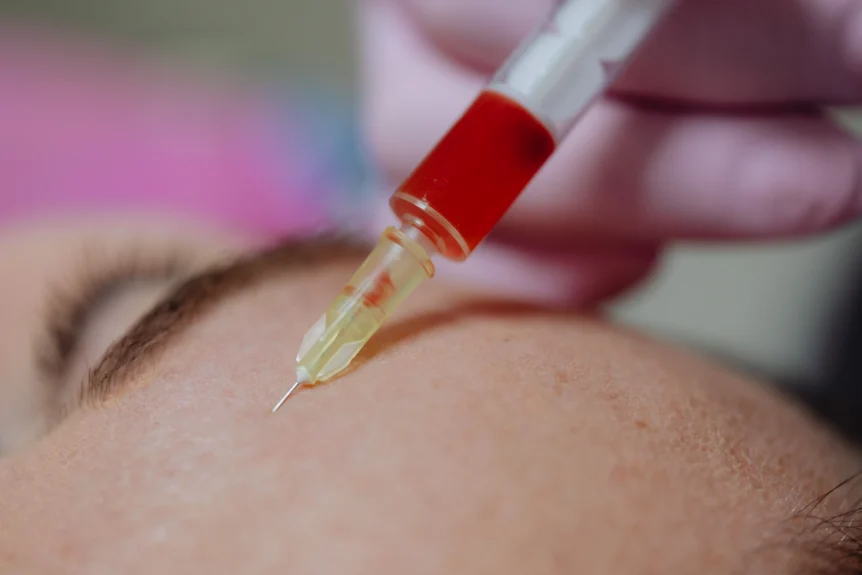
You may be noticing changes that feel subtle at first. Skin doesn’t bounce back the way it used to. A soft tissue strain lingers longer than expected. Hair seems thinner in certain lighting. Many people, in that moment, start looking for something that feels more natural than surgery but more purposeful than a cream or a generic wellness trend.
Platelet-Rich Plasma, often called PRP, sits in that middle ground. It uses your own blood, prepared in a concentrated form, to support the body’s repair signals where they’re needed most. That idea is simple. The details are where readers often get lost, and those details matter.
Harnessing Your Body’s Healing Power
PRP appeals to people for a reason. It doesn’t introduce a foreign filler or rely on a dramatic change in appearance. Instead, it focuses on your body’s own healing tools and then places them more precisely in an area that could benefit from support.
In plain language, PRP is a concentrate of platelets suspended in plasma. Platelets are best known for helping blood clot, but they also release signaling proteins involved in tissue repair. When clinicians prepare a higher concentration of platelets and place that concentrate into the skin or soft tissue, the goal is to encourage a more active regenerative response.
Why are so many people considering PRP?
Interest in PRP has moved well beyond a niche discussion. The global PRP market was valued at approximately USD 0.75 billion in 2023 and is projected to reach USD 2.62 billion by 2032, with a compound annual growth rate of 14.98%, according to SNS Insider’s platelet-rich plasma market report. That kind of growth reflects broader acceptance in both chronic injury care and aesthetic rejuvenation.
That popularity can be helpful, but it can also create confusion. People hear that PRP is “natural” and assume it’s basically the same. It isn’t. The final product depends on how the blood is processed, how concentrated the platelets are, and how carefully the treatment is matched to the target tissue.
The better question isn’t simply “Does PRP work?” It’s “What kind of PRP is being prepared, and for what purpose?”
A restorative approach, not a shortcut
For skin and soft tissue concerns, PRP is often chosen by patients who want improvement that looks like themselves, only healthier. They’re not looking for an artificial effect. They want to support collagen activity, tissue quality, and the healing response in a way that aligns with the body’s normal biology.
That’s also why education matters. A thoughtful clinic should explain what PRP can reasonably support, what it can’t promise, and why preparation standards matter. If you’d like a broader overview of injury-focused applications, ICBR has a useful primer on what platelet-rich plasma therapy is and how it treats injuries.
The Science of Platelet-Rich Plasma
Blood contains several main components, each with a different job. Red blood cells carry oxygen. White blood cells are involved in immune defense. Plasma is the liquid portion that transports proteins and nutrients. Platelets are small cell fragments that help coordinate clotting and early healing.
That last group is the star of PRP.
What platelets actually do
When tissue is injured, platelets are among the first responders. They release biologically active factors from internal granules. These signals help recruit repair activity, support collagen production, and encourage the local environment to shift toward healing.
That’s why PRP isn’t about “adding youth” from the outside. It’s about concentrating the body’s own repair messengers and delivering them with intention.
| Blood component | Main role | Why it matters in PRP |
| Red blood cells | Oxygen transport | Usually reduced in the final concentrate |
| White blood cells | Immune response | May vary depending on preparation style |
| Plasma | Fluid carrier | Suspends the platelets |
| Platelets | Clotting and growth factor release | Main therapeutic target |
How PRP is prepared
The clinic process is usually straightforward for the patient. First, a small blood sample is drawn. Next, the sample is centrifuged to separate the components. Then the platelet-rich portion is isolated for treatment.
The centrifugation step is where quality control is essential. A controlled preparation study found that a two-step protocol of 900g for 5 minutes followed by 1000g for 10 minutes is used to help achieve a therapeutic platelet concentration of over 1 million platelets per microliter, as described in this review of PRP preparation methods.
It’s important to note that PRP preparation protocols vary. For instance, a 2021 PRP preparation guideline recommends much lower ranges, 100–300g for 5–10 minutes first spin and 400–700g for 10–17 minutes second spin. Some guidelines recommend double-spin methods, but centrifuge force, time, tube size, blood volume, and collection technique all affect the final product.
That sounds technical, but the takeaway is simple. If the spin is too aggressive, too brief, poorly timed, or inconsistently handled, platelets can be lost or activated at the wrong stage. When that happens, the final product may be less useful.
Why preparation affects the outcome
This is one of the biggest sources of misunderstanding. Patients often assume the injection itself is the treatment. In reality, the quality of the concentrate is part of the treatment.
A careful protocol aims to create a repeatable product. That matters whether PRP is being used to support soft tissue healing, improve scalp health in thinning hair, or assist skin rejuvenation. For a closer look at this treatment category, ICBR provides information on PRP for soft-tissue support.
Well-prepared PRP starts before the injection. It starts with how the sample is collected, handled, spun, and isolated.
Common Uses for Soft Tissue Rejuvenation
PRP is versatile, but it isn’t used the same way in every setting. In a soft tissue context, most patient interest falls into three broad categories: skin quality, hair support, and orthopedic or overuse-related tissue care.
Skin rejuvenation
A common patient profile is someone who says, “I don’t want to look different. I want to look fresher.” That’s where PRP often enters the conversation. The aim is to support the skin’s condition rather than add volume.
In practice, people usually seek PRP for concerns such as:
- Texture changes: Skin may feel rougher or look less refined over time.
- Tone and vibrancy: Dullness can make a face appear tired even when you feel well.
- Early fine lines: Some patients want a restorative option before considering more structural treatments.
PRP is attractive here because it uses autologous material, meaning it comes from your own blood. That doesn’t guarantee a cosmetic transformation, but it does align with a more biologically supportive approach.
Hair support
Another frequent scenario is gradual thinning rather than sudden hair loss. Patients may notice a wider part, less density at the crown, or weaker-looking strands around the temples. In those cases, PRP is often discussed as a way to support the local tissue environment around existing follicles.
Hair treatment tends to resonate with people who want to act early. They’re not necessarily trying to replace hair surgically. They want to support what’s still there.
If hair thinning is your main concern, ICBR has a dedicated article on whether PRP helps with thinning hair.
Tendons, ligaments, and chronic strain
PRP also has a strong foothold in orthopedic care, especially where soft tissue healing can be frustratingly slow, as the same broad biological logic used in aesthetics, namely supporting repair signals, also applies to chronically irritated tendons and related structures.
Its use in orthopedics has expanded rapidly. The number of PRP injections quadrupled between 2010 and 2020, according to a PubMed-indexed study on orthopedic PRP utilization. That rise was especially notable in conditions such as knee osteoarthritis.
Patients often think of PRP as either cosmetic or orthopedic. In reality, it belongs to a larger regenerative category that touches both appearance and function.
For the right person, that overlap is part of the appeal. Healthier soft tissue can mean a face that looks more rested, a fuller scalp, or an overworked tendon with a better healing environment.
Your PRP Procedure: What to Expect at ICBR
Most patients feel more comfortable once they understand the sequence. PRP is usually a straightforward office-based procedure, and it’s typically much less intimidating than people imagine before their first visit.
Consultation and planning
The appointment begins with a review of your goals, medical history, and the area being treated. This step matters because PRP isn’t one-size-fits-all. The approach for facial skin differs from that for scalp support or a soft-tissue concern near a joint or tendon.
You’ll also have a chance to ask practical questions. How much downtime should you expect? What will the area feel like afterward? Is this being used as a standalone treatment or alongside other non-surgical therapies?
Blood draw and preparation
After the plan is confirmed, a clinician draws a small amount of blood from your arm. That sample is then processed while you wait. During this period, the blood is separated so the platelet-rich portion can be collected for use.
Because PRP comes from your own blood, many patients find the concept reassuring. There’s no mystery substance involved. The treatment is built from material your body already recognizes.
Targeted application
Once the PRP is ready, it’s placed into the treatment area with careful technique. Depending on the indication and the treatment site, a topical numbing product may be used to improve comfort. The injections themselves are typically brief and focused.
At the International Clinic of Biological Regeneration, PRP is offered as a complementary, non-surgical service at clinic locations in Mexico and The Bahamas. For many patients, it fits into a broader wellness plan rather than acting as a standalone answer.
After the visit
It’s normal to have some temporary tenderness, fullness, or mild redness depending on the site treated. Individuals typically resume a normal routine fairly quickly, though your clinician may suggest avoiding intense activity or unnecessary irritation to the area for a short period.
If you’re anxious about PRP, ask your provider to walk you through the appointment minute by minute. Most of the uncertainty disappears once the process is clear.
Benefits, Evidence, and Realistic Outcomes
PRP has real appeal because it works with the body’s own healing biology. That’s its central strength. It can provide a concentrated signal for repair in areas where tissue quality, recovery, or regenerative activity needs support.
Still, a responsible conversation about PRP has to separate promising use from proven cosmetic claims.
Where the evidence is stronger
Some applications have a more established footing than others. PRP has stronger support in areas like certain orthopedic conditions and hair-related uses than it does for broad anti-aging claims for the face.
That distinction matters. A patient may hear the word “rejuvenation” and assume that means wrinkle reduction is firmly established. It isn’t that simple.
What patients can reasonably hope for
In skin and soft tissue settings, realistic goals often include:
- Gradual change: Improvement, when it happens, tends to unfold over time rather than overnight.
- Supportive results: PRP may improve tissue quality and the healing response, but it isn’t a substitute for other treatments.
- Natural-looking progress: Because the treatment is based on your own biology, the effect people seek is usually subtle and restorative.
That last point is important. PRP is often best for patients who appreciate refinement. They’re usually not chasing a dramatic, immediate makeover.
What PRP doesn’t do
PRP shouldn’t be framed as a cure-all. It won’t replace surgery when structural correction is needed. It won’t produce identical results in every patient. And in cosmetic medicine, it shouldn’t be oversold as a guaranteed wrinkle solution.
A more accurate way to view it is as a biological support therapy. It may help create a better environment for repair and rejuvenation, especially when used thoughtfully and for the right reason.
If you’re weighing cosmetic expectations carefully, this discussion of PRP and anti-aging can help frame the question more realistically.
The patients happiest with PRP are usually the ones who understand that regeneration is a process, not an instant cosmetic event.
PRP in Combination with Other Therapies
PRP is often easier to understand when you compare it with what it is not.
For example, fillers add volume. They change contour by placing material under the skin. PRP works differently. It aims to support tissue behavior, not merely occupy space. One approach is structural. The other is biological.
How combination planning can make sense
In practice, clinicians may use PRP as part of a layered plan. A patient could use one treatment for hydration and skin surface quality, another for volume, and PRP for tissue support. These aren’t interchangeable categories.
| Therapy type | Primary role | Best understood as |
| PRP | Supports repair signaling | Regenerative support |
| Fillers | Add or restore volume | Structural enhancement |
| Facial peels | Improve surface appearance | Skin renewal |
A localized tool within a broader wellness strategy
PRP can also make sense as part of broader rejuvenation programs. Some patients pursue body-wide wellness support and then use PRP for a specific local concern, such as facial skin quality or a soft tissue area that needs focused attention.
That’s also why people sometimes ask about pairing PRP with other biologically oriented options. If you’re exploring adjacent regenerative approaches, ICBR has background information on exosome therapy and how it works.
The key is not to stack treatments randomly. A good plan matches the mechanism to the goal. If the issue is local tissue quality, PRP may be relevant. If the issue is lost facial volume, another approach may be more appropriate.
Is PRP Right for You? Candidate Selection and Aftercare
The best PRP candidates are usually people with a clear, focused goal. That may be early skin quality changes, thinning hair, or a soft-tissue issue in which a clinician believes a regenerative approach could be appropriate.
It may be less suitable when there’s an active infection, a blood-related problem, or another medical issue that changes safety or platelet function. Pregnancy is also a reason many clinicians pause and reassess timing. These decisions should come from an individual consultation, not from a generic checklist online.
Why provider selection matters
One of the most overlooked facts about PRP is that it isn’t a single standardized product. CMS notes that PRP outcomes can vary based on platelet concentration, preparation method, injection technique, and related protocol differences, as discussed in this Medicare coverage policy on platelet-rich plasma.
That means choosing a provider isn’t just about finding someone who offers PRP. It’s about finding someone who can explain:
- How the PRP is prepared: Consistency matters.
- Why it’s being recommended: The indication should make biological sense.
- What the limits are: Honest expectations are part of good care.
Aftercare basics
After treatment, patients are commonly advised to be gentle with the treated area for a short time. That may include avoiding strenuous activity, unnecessary pressure, or products that could irritate recently treated skin. Your clinician may also review medication considerations depending on your treatment plan and health history.
The most important step is follow-through. Ask for clear instructions, follow them closely, and keep your own physician informed if you’re managing broader medical issues.
If you’re considering PRP as part of a non-surgical rejuvenation plan, International Clinic of Biological Regeneration provides educational information and offers PRP at clinic locations in Mexico and The Bahamas. A conversation with an ICBR clinician, along with guidance from your personal physician, can help you decide whether this approach fits your goals, health history, and expectations.