
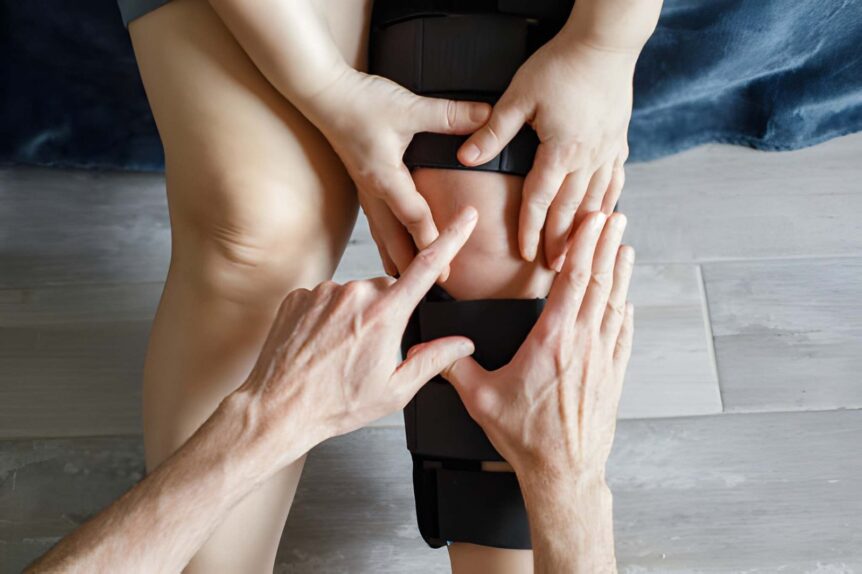
A torn meniscus often sets off a very familiar chain of thoughts. You hear the diagnosis, you picture damaged cartilage in your knee, and your mind jumps straight to surgery.
That reaction makes sense. Knee pain can make simple things feel uncertain, from walking down the stairs to getting out of a car. Many people assume a tear must be cut out, trimmed, or repaired right away.
But that is not how many meniscus injuries are best managed. In many cases, meniscus tear treatment without surgery is not a backup plan. It is the smarter first move when the goal is to reduce pain, restore function, and protect the knee for the long run.
Your Knee Injury Diagnosis and The Path Forward
A patient in the clinic might say, “My MRI showed a meniscus tear, so I guess surgery is next.” That belief is common, especially when the knee hurts, and the scan makes the injury feel urgent.
The problem is that a tear on an MRI does not automatically mean an operation will improve your future knee health.
That detail matters. The meniscus is not spare material. It is part of the knee’s shock-absorbing system, and removing part of it can reduce cushioning and contribute to cartilage wear over time.
For many adults, a key question is not “How do I fix the tear fast?” It is “How do I help this knee work well for the next decade and beyond?” That shift in thinking changes everything.
Healing the knee, not chasing the scan
A meniscus tear can cause pain, swelling, stiffness, and a sense that the knee is not trustworthy. But symptoms often come from more than the tear itself. Nearby inflammation, muscle inhibition, joint irritation, and poor movement patterns can all worsen the knee.
That is why a careful, non-surgical plan can be so effective. It addresses the whole joint environment.
A tear on imaging is only part of the story. Your pain, function, stability, and long-term joint preservation matter just as much.
If you are at the beginning of this process, it helps to know what a thoughtful evaluation looks like. A good overview of the patient journey can be found at what to expect during care.
Understanding Your Meniscus Tear
The meniscus is easier to understand when you stop thinking of it as a random piece of cartilage. Think of it as a load manager inside the knee.
Each time you walk, squat, pivot, or climb stairs, the meniscus helps spread force across the joint. It also helps with shock absorption, stability, and smooth movement between the thigh bone and shin bone.
Why preservation matters
Orthopedic care has increasingly focused on preserving meniscal tissue whenever possible. In a large study of primary arthroscopic surgeries, the proportion of tears considered repairable rose from 1.6% in 2002 to 2006 to 82.3% in 2017 to 2021, while meniscectomy dropped from 75.7% to 17.7%, and meniscal repair rose from 0.4% to 81.3%. That same study found that tears were most often located in the right knee (53.9%), the medial meniscus (59.1%), and the posterior horn (61.7%). You can review those findings in this study on the shift toward meniscus preservation.
That trend reflects an important idea. Clinicians increasingly recognize that keeping native meniscal tissue is often better for long-term joint health than removing it.
Not all tears are the same
People often hear “meniscus tear” as if it describes one injury. It does not.
Two broad patterns show up most often:
- Acute tears: These occur with a twist, a pivot, a squat, or a sports injury. The knee may swell quickly, and the patient often remembers the exact movement that triggered the pain.
- Degenerative tears: These develop gradually as the tissue changes over time. Someone may notice stiffness, aching, or intermittent catching without one dramatic injury.
This distinction affects treatment decisions. A younger athlete with a fresh twisting injury is not the same as an adult whose knee has been gradually getting sore over months.
The red zone and white zone
Location matters because blood supply matters.
The outer portion of the meniscus is commonly called the red zone. It has better circulation, which enhances its healing potential. The inner portion is often called the white zone, where circulation is limited, and healing is more difficult.
That does not mean white-zone tears always require surgery. It means treatment has to respect biology. A stable tear in a lower-blood-supply area may still respond well when inflammation is controlled, strength is rebuilt, and joint mechanics improve.
Questions worth asking after an MRI
Instead of asking only, “Do I need surgery?” ask:
- What type of tear do I have
- Where is it located
- Is it stable or displaced
- Do my symptoms match the MRI findings
- Is the goal pain relief, function, tissue preservation, or all three
These questions lead to better conversations and better decisions. If you want a broader understanding of the tissues that support joint structure and recovery, this overview of connective tissue and its functions is a useful background.
Starting Your Recovery with Conservative Care
The first phase of care often sounds simple. Rest, ice, compression, and elevation. Many people dismiss that advice because it seems too basic.
In practice, this stage is active treatment. Done well, it can calm the knee enough to let healing begin and reduce the risk of turning a manageable injury into a prolonged one.
What each step is doing
Rest does not mean complete bed rest. It means temporarily reducing movements that repeatedly aggravate the knee, such as deep squatting, twisting, kneeling, or impact exercise.
Ice helps reduce local irritation and can make the knee more comfortable after activity. It is most useful when the joint is warm, swollen, or throbbing.
Compression helps manage swelling. Less fluid inside and around the joint often means better comfort and easier motion.
Elevation supports fluid drainage, especially after a long day on your feet or after rehab work.
Smart activity changes
Many patients struggle here because they hear “take it easy” and either do too little or too much.
A better approach is selective loading:
- Keep moving within reason: Gentle walking and controlled range-of-motion exercises can help prevent stiffness.
- Avoid sharp pivots: Twisting under load tends to irritate the meniscus.
- Use pain as feedback: Mild discomfort may be acceptable, but escalating pain or swelling is a sign to scale back.
- Protect sleep and daily function: Recovery goes better when the knee isn’t re-aggravated throughout the day.
Early recovery is not passive waiting. It is a short window where you reduce irritation so the next phase, especially physical therapy, can work.
Over-the-counter anti-inflammatory medication may be part of this phase for some people, if their physician approves. The goal is not to numb the knee and ignore it. The goal is to settle the environment inside the joint.
Lifestyle basics matter more than patients expect. Sleep, nutrition, body weight management, and appropriate movement all influence how the knee responds. For broader support habits, these healthy lifestyle tips on diet and exercise can help frame the bigger picture.
The Power of Structured Physical Therapy
Physical therapy is often treated like the side dish. For many meniscus tears, it is the main course.
That is especially true when the tear is degenerative, the knee is stable, and there is no true locking. In that setting, a well-designed rehabilitation plan can match surgery for meaningful outcomes while preserving tissue.
What the evidence tells us
In patients over 45 with degenerative medial meniscus tears, randomized trial data reviewed in this publication on treatment options for meniscal tears showed that structured physical therapy alone produced outcomes equivalent to surgery. At follow-up, there was no significant difference in pain, function, or satisfaction, with satisfaction generally high for both groups.
That finding is powerful because it challenges a very old assumption. Removing damaged tissue does not automatically produce a better knee.
Why PT works
A meniscus does not operate by itself. The knee functions as a team.
When pain appears, the quadriceps often weaken or “shut down.” Balance worsens. The hip may stop controlling the leg well. The body starts unloading the painful side or moving in a guarded pattern. Those changes can keep symptoms going even as the original irritation settles.
Structured PT addresses that chain reaction.
A strong program usually works on:
- Strength: Especially the quadriceps, hamstrings, glutes, and calves
- Neuromuscular control: Training how the leg tracks during stepping, squatting, and changing direction
- Balance and proprioception: Improving the body’s sense of joint position
- Mobility: Restoring comfortable motion without forcing the joint
Generic exercise is not enough
Many patients search online, do a few knee exercises, and conclude that therapy “didn’t work.” Usually, the issue is not the exercise itself. It is that the program was not specific enough.
A good therapist adjusts the plan based on your symptoms, tear pattern, movement habits, and goals.
For example, one person may need to restore extension and reduce swelling before strengthening. Another may already have full motion but poor single-leg control. Another may need gradual reloading to return to tennis, hiking, or golf.
What commitment looks like
Physical therapy works best when it is consistent. The benefits build over time, not after one session.
A typical experience may include:
- Calming the knee first with swelling control, movement modifications, and pain-aware loading
- Rebuilding strength in the muscles that help absorb force
- Improving movement quality so the knee tracks more efficiently during daily activities
- Returning to valued activity with a plan rather than a guess
PT is not just about stronger muscles. It helps the knee distribute force better, which can reduce stress on the irritated meniscus.
Some patients also benefit from bracing, footwear adjustments, or gait coaching during rehab. Those details are not glamorous, but they can be very effective.
The larger point is simple. When physical therapy is personalized, progressive, and taken seriously, it is one of the most powerful forms of meniscus tear treatment without surgery.
Advanced Non-Surgical Injection Therapies
Sometimes conservative care and physical therapy get the knee part of the way there, but not all the way. Pain improves, then plateaus. Swelling keeps returning. Activity tolerance remains limited.
That is where injection-based treatment may come into play. These options do not all do the same thing, yet patients are often confused because they are presented as interchangeable.
Four common categories
Some injections are mainly used to relieve symptoms. Others are chosen to support the knee’s healing environment more directly.
| Therapy | Primary Goal | Mechanism | Best For |
| PRP | Support healing and reduce inflammation | Uses components from the patient’s own blood, including growth factors | Patients seeking a biologic option that supports tissue recovery |
| Hyaluronic acid | Improve joint comfort and lubrication | Adds a cushioning, lubricating substance to the joint environment | Patients whose knee irritation includes friction and stiffness |
| Corticosteroid | Reduce inflammation quickly | Potent anti-inflammatory effect | Short-term symptom control when swelling and pain are prominent |
| Prolotherapy | Stimulate a healing response | Uses an irritant solution intended to trigger repair activity | Selected cases where a clinician feels tissue stimulation is appropriate |
Conventional symptom-focused injections
Corticosteroid injections can reduce inflammation and provide faster symptom relief for some patients. They are typically considered when pain and swelling are limiting progress.
Hyaluronic acid injections are used to support joint lubrication. In some patients, this can make movement more comfortable, especially when stiffness and joint irritation are present.
These options can be helpful, but they are usually discussed as tools for symptom management rather than solely for tissue preservation.
PRP and biologic support
Platelet-rich plasma, or PRP, is different. It uses components from your own blood and is intended to deliver growth factors into a targeted area. In practice, that means a clinician is trying to support the body’s own repair signaling rather than only quiet inflammation.
Some small studies suggest PRP may improve pain/function in selected meniscus cases, but evidence quality varies and results are not guaranteed. Those findings help explain why PRP has become part of many tissue-preserving conversations.
That does not mean PRP is right for everyone. Tear location, chronicity, symptoms, and the overall state of the joint all matter. But for the right patient, it can be a meaningful step between basic conservative care and surgery.
A more specific overview of this type of treatment is available on this page about platelet-rich plasma for soft tissue support.
Where Cell Therapy fits
Some patients are looking beyond short-term pain control. They want a plan that aligns with broader goals around recovery, vitality, and biological support.
In those conversations, some clinics discuss Cell Therapy as part of a wider wellness-oriented care model. The focus is not on surgically altering the knee, but on supporting the body’s natural restorative processes more fully. For a high-end wellness audience, that may be part of how treatment planning is framed, especially when recovery is being considered in the context of connective tissue quality, inflammation, and long-term function.
How to think about the options
Instead of asking “Which injection is best?” ask a narrower question.
- Do I need quick symptom control
- Do I need support for tissue healing
- Is my knee problem mostly inflammation, or is it also poor load tolerance
- Have I already done the work of structured rehab
Those questions produce better decisions than choosing the newest or most marketed injection.
Injections work best when they are part of a broader strategy, not a shortcut around diagnosis, rehab, and load management.
A Practical Pathway for Choosing Your Treatment
Once patients understand the menu of options, the next challenge is choosing wisely. The goal is not to do everything. The goal is to do the right things in the right order.
For many people, the best plan starts by asking whether the knee needs rescue, repair, support, or better mechanics.
A simple decision framework
High-quality randomized trials, including a sham-surgery trial discussed in this review of meniscus treatment evidence, found that non-surgical treatment matched surgical outcomes for many meniscus tears, with similar pain relief and function years later.
That evidence supports a practical pathway.
Start with the basics first
Nearly every patient benefits from an initial phase of:
- Inflammation control
- Activity modification
- Structured physical therapy
- Reassessment over time
This first layer gives the knee a fair chance to settle and often clarifies what is driving symptoms.
Match the plan to the tear and the person
A useful conversation with your clinician should consider:
- Tear pattern: Stable or unstable, acute or degenerative
- Tear location: Better blood supply areas tend to have more healing potential
- Your age and activity goals: Returning to running, gardening, travel, or strength training may require different priorities
- Joint context: Is this an isolated tear, or part of a bigger knee picture that includes cartilage wear or osteoarthritis
Add injections only when they solve a real problem
If pain is blocking progress in therapy, a symptom-focused injection may be considered. If the aim is more biological support, PRP may make more sense. If the patient is pursuing a broader regenerative-wellness model, Cell Therapy may be part of that strategy.
The order matters. A biologic treatment layered onto poor mechanics and uncontrolled swelling is rarely as effective as one placed into a well-managed rehab plan.
What long-term thinking looks like
Patients often ask, “What will get me feeling better fastest?” That is understandable. But a better question is, “What gives me the best chance of keeping this knee healthy?”
That mindset favors preservation. It respects the value of meniscal tissue, uses rehab as active treatment, and reserves surgery for cases that need it.
A smart non-surgical plan is not indecisive. It is strategic.
Red Flags: When is Surgery Necessary
A balanced discussion matters here. Non-surgical care is often effective, but it is not the answer in every case.
Some situations call for a surgical opinion sooner rather than later.
Signs that deserve prompt review
True mechanical locking is one of the biggest red flags. This means the knee is physically stuck and cannot fully straighten or bend because something inside the joint is blocking motion.
A large displaced tear, including a bucket-handle pattern, may also be less likely to settle with conservative care alone. In those cases, the tear’s structure can interfere with normal mechanics.
Other reasons for surgical consultation may include:
- Persistent instability: The knee repeatedly gives way in a way that limits safe movement
- Failure of a well-executed non-surgical program: Not a few days of trying, but a thoughtful course of rehab and appropriate follow-up
- Symptoms that do not match progress: Ongoing severe mechanical symptoms despite good adherence to treatment
A reasonable middle ground
Needing a surgical consultation does not mean you failed non-surgical care. It means the knee may be showing a pattern that requires a different tool.
Likewise, choosing conservative care first is not avoidance. It is often the most evidence-aligned starting point for a large group of patients.
If you want to explore how biologic options may fit before considering an operation, this article on PRP therapy for knee pain and avoiding surgery offers a useful overview.
Educational content can guide your questions, but it cannot replace an in-person exam, imaging review, and a clinician’s judgment about whether your knee is stable or mechanically blocked.
Frequently Asked Questions About Non-Surgical Recovery
Can a meniscus tear really heal without surgery?
Some can, and many can become far less painful and far more functional without an operation. The answer depends on tear type, location, stability, age, and the overall condition of the knee.
A common source of confusion is the word heal. Some patients expect the MRI to become the whole story. In real life, successful treatment often means reduced pain, improved strength and motion, and a return to normal activity, even if the imaging does not look dramatic.
How long does non-surgical recovery take
Recovery varies. Some knees calm down relatively quickly. Others need a longer period of load management and structured rehab.
In general, think in phases rather than in terms of deadlines. Early symptom control comes first. Strength and movement quality come next. Return to sport or demanding activity comes last.
Should I stop exercising completely?
Usually no. Many individuals do better with modified activity rather than a complete shutdown.
Walking, gentle range-of-motion work, and carefully selected strengthening often help. Deep twisting, pivoting, hard impact, or loaded kneeling may need to pause for a while.
If my MRI shows a tear, why does my doctor still recommend PT
Because MRI findings do not always tell you which treatment will work best. Some tears are painful, some are incidental, and some are part of a larger degenerative picture.
Physical therapy can improve joint function, reduce stress on the irritated area, and determine whether the knee can recover well without tissue removal.
Do injections replace rehab?
No. Injections can support a plan, but they do not replace the work of restoring strength, control, and movement quality.
Think of injections as tools that may improve the healing environment or reduce symptom barriers. The knee still needs a functional foundation.
How do I know if I am on the right track?
Good signs include less swelling, easier walking, improved confidence, better tolerance for stairs, and a gradual return to desired activity.
Progress is not always perfectly linear. The important question is whether the overall direction is improving over time.
Is this article medical advice
No. This is general educational information. Decisions about meniscus tear treatment, no surgery, should be made with your own physician or a qualified clinician who can examine your knee and review your imaging in context.
If you are exploring non-surgical options for joint comfort, recovery support, and long-term wellness, International Clinic of Biological Regeneration offers a patient-centered approach built around PRP, Cell Therapy, IV infusions, and broader rejuvenation care. ICBR has welcomed patients to its clinics in Mexico and the Bahamas for an extended period. Talk with an ICBR clinician and your personal doctor to decide whether these options fit your health goals.