
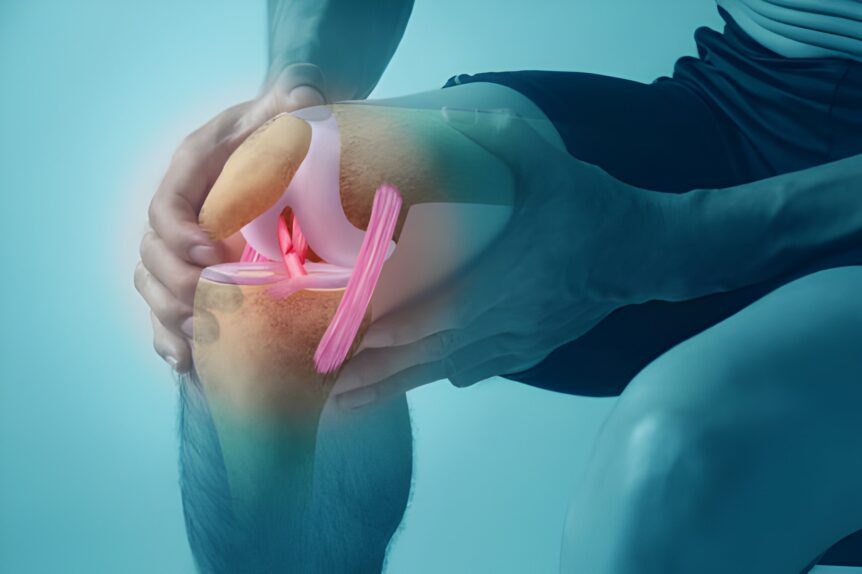
If you’ve ever felt that sharp pop in your knee followed by pain and swelling, you know how alarming an ACL injury can be. For most people, the first thought that comes to mind is surgery. But what if there was another way to heal without going under the knife?
Platelet-rich plasma (PRP) therapy is changing how ACL injuries are treated. This advanced technique uses your body’s own healing power to repair damaged ligaments naturally. More athletes, weekend joggers, and active individuals are turning to PRP for ACL tear recovery because it supports regeneration and helps them get back to daily activities faster.
At ICBR, we have seen how PRP helps patients regain stability and confidence while avoiding the risks of invasive surgery. In this article, we’ll explore how PRP works, what the treatment involves, and who can benefit most from it.
Understanding ACL Tears and Why They’re So Challenging to Heal
The anterior cruciate ligament, or ACL, is one of the main stabilizing ligaments in your knee. It connects your thighbone to your shinbone and keeps your knee stable during movement. When you tear your ACL, whether from a sports injury or a sudden twist, you can experience pain, swelling, and difficulty walking or bearing weight.
ACL tears are particularly difficult to heal because the ligament has limited blood flow. Without a rich blood supply, your body struggles to deliver enough nutrients and oxygen to repair the damaged tissue. This lack of natural healing makes many ACL injuries slow to recover and sometimes incomplete without intervention.
PRP therapy offers a way to change that. By concentrating and injecting your own platelets into the injured ligament, PRP provides a strong boost of growth factors that stimulate repair where your body needs it most.
What Is PRP Therapy and How Does It Work?
PRP stands for Platelet-Rich Plasma. It’s a regenerative medicine treatment that uses components from your own blood to promote healing. Here’s how it works: a small amount of blood is drawn and spun in a centrifuge to separate out the platelets and plasma. This produces a golden serum rich in proteins, growth factors, and signaling molecules that encourage tissue repair.
When PRP is injected into an injured ACL, it activates your body’s natural healing response. The platelets release growth factors that help form new tissue, reduce inflammation, and stimulate collagen production. These biological processes help strengthen and restore the ligament over time.
Recent research supports this approach. A 2024 study found that patients who received PRP for partial ACL tears showed improved joint stability and faster recovery than those who received standard physical therapy alone. PRP doesn’t replace your body’s healing, but it enhances it by improving efficiency and targeting repair at the source of injury.
How PRP Treatment Is Used for ACL Tears
PRP Injection Process for ACL Injuries
The PRP treatment process is simple, safe, and minimally invasive. Most sessions take less than an hour. Here’s what you can expect:
- Blood Draw: A small sample of blood is taken from your arm, similar to a routine blood test.
- Centrifugation: The blood sample is placed in a centrifuge to separate the platelet-rich plasma from other components.
- Preparation: The PRP is carefully extracted into a syringe for precise application.
- Injection: Using ultrasound guidance, your clinician injects the PRP directly into the ACL to ensure accuracy and effectiveness.
Since PRP uses your own blood, there’s virtually no risk of allergic reaction or rejection. Patients often report only mild pressure or soreness during the injection.
What to Expect Before, During, and After Treatment
Before treatment, your doctor may order imaging tests such as an MRI to confirm the extent of the tear. You might be asked to stop taking anti-inflammatory medications before your session, as these can interfere with the platelets’ healing action.
After the injection, mild soreness or stiffness around the knee is common and usually lasts one to two days. You can resume light activity shortly afterward, but strenuous movements should be avoided for several weeks.
Healing continues gradually over the next few months as new tissue forms. Most patients notice improvements in stability and comfort within four to six weeks, with stronger results at three to six months.
PRP vs. ACL Surgery: Which Is Right for You?
-
Benefits of Non-Surgical ACL Recovery
Surgery is not always the only solution. For partial tears and mild ligament damage, PRP can often provide excellent results. Here are some key benefits:
- Natural healing: PRP stimulates your body’s cells to repair tissue rather than replacing it with a graft.
- Less downtime: Most patients return to regular activities faster compared to surgical recovery.
- Lower risk: No anesthesia or incisions means fewer complications.
- Less pain: PRP patients generally experience less swelling and post-treatment discomfort.
For many people, this non-surgical option offers a more balanced and natural way to recover while keeping daily life on track.
-
When Surgery Might Still Be Necessary
In some cases, surgery is still required. Complete ACL ruptures, severe instability, or combined ligament injuries may need surgical reconstruction. Even then, PRP can play a supportive role. Some patients use PRP before surgery to strengthen tissue or afterward to promote faster healing.
The decision depends on factors such as injury severity, physical activity level, and overall health. A sports medicine specialist or orthopedic doctor will guide you in determining whether PRP or surgery is best for your situation.
Who Is a Good Candidate for PRP Treatment?
PRP therapy is best suited for patients who have partial ACL tears or moderate ligament injuries and want to avoid surgery. You may be a good candidate if you:
- Have a confirmed partial ACL tear on MRI
- Experience mild to moderate instability or knee pain
- Are active and prefer a non-surgical approach
- Are committed to physical therapy and follow-up care
Patients with advanced arthritis, complete tears, or certain medical conditions may not benefit as much. During your consultation, your provider will assess your injury and discuss whether PRP is the right fit for you.
At ICBR, our approach is personalized. We consider your injury type, activity level, and recovery goals to develop a PRP treatment plan that aligns with your needs. Combined with physical therapy, PRP can enhance recovery and reduce the chance of re-injury.
Don’t Let a Torn ACL Hold You Back—Call ICBR for Expert PRP Care
If your ACL injury is keeping you from moving comfortably, there’s a better path forward. PRP therapy could help you heal faster, rebuild strength, and avoid the long recovery that surgery often requires.
At ICBR, we specialize in regenerative medicine, offering state-of-the-art PRP and cellular therapies for joint and ligament injuries. Our experienced team uses advanced imaging and proven methods to deliver targeted, effective treatment designed to restore function and reduce pain.
You deserve a recovery plan that helps you return to the activities you love. Call ICBR today at (314) 921-3997 to schedule your consultation and find out how PRP for ACL tear recovery can help you move confidently again.