
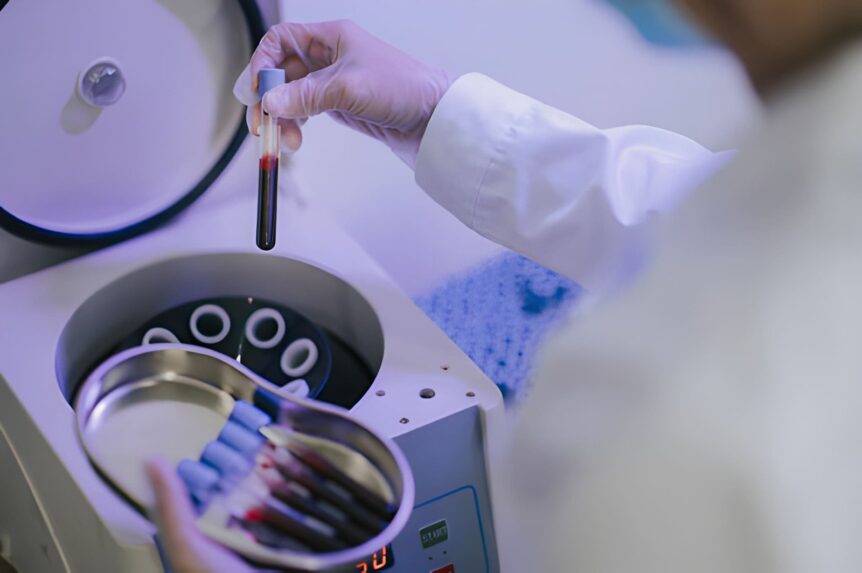
Platelet-Rich Plasma (PRP) for soft tissue is a therapy that uses a highly concentrated form of your own blood platelets to support your body’s natural restorative systems. This minimally invasive treatment is designed to deliver a powerful dose of growth factors directly to areas like the skin, tendons, or ligaments, encouraging them to renew and rebuild from the inside out.
What Is PRP Therapy for Soft Tissue Rejuvenation?
Platelet-Rich Plasma (PRP) therapy is a straightforward yet elegant approach that taps into your body’s built-in ability to heal itself. The whole process starts with a simple blood draw, just like you would have for a routine lab test. That blood is then placed into a centrifuge, a special device that spins at high speed to carefully separate all of its different components.
This spinning isolates and concentrates the platelets, creating a golden, liquid solution that’s packed with supportive potential. This resulting PRP is then ready to be precisely delivered to a target area, whether that is the face for skin rejuvenation or into soft tissues that need extra support.
The Goal of PRP Treatment
At its core, the goal of PRP for soft tissue is to provide a targeted boost of biological resources right where they are needed most. While platelets are famous for their role in clotting blood, they are also little powerhouses filled with growth factors.
Think of these growth factors as a specialized construction crew that has been dispatched to a site needing repairs. They carry the signals and raw materials needed to tell local cells to get to work repairing and renewing tissue. By concentrating these platelets into PRP, the therapy essentially amplifies this natural process.
To help you get a quick overview, here is a simple breakdown of what PRP therapy involves.
PRP Therapy At a Glance
| Aspect | Description |
| Source Material | Your own blood, making it a natural (autologous) treatment. |
| Active Components | Concentrated platelets rich in growth factors. |
| Mechanism | Supports the body’s natural healing and cellular renewal processes. |
| Procedure | A three-step process: blood draw, centrifugation, and injection. |
| Primary Goal | To support the repair and rejuvenation of soft tissues like skin, tendons, and ligaments. |
| Recovery | Minimal downtime, with most patients resuming normal activities quickly. |
This table shows just how streamlined and focused the PRP process is, using your body’s own resources to promote wellness.
A Growing Field of Interest
The interest in Platelet-Rich Plasma (PRP) soft tissue treatments has expanded significantly as more people seek out minimally invasive options for wellness and anti-aging. This growing confidence is mirrored in the market’s trajectory. The global platelet-rich plasma market was valued at USD 627.9 million in 2022 and is projected to climb to USD 1,936.0 million by 2030. This growth is driven by its broad applications, especially in supporting soft tissue health.
Much of the treatment’s appeal lies in its use of your own biological material, which aligns perfectly with a wellness philosophy centered on working with the body, not against it.
By harnessing the power already within your blood, PRP offers a way to support tissue health from the inside out, promoting a foundation for both functional comfort and aesthetic vitality.
Whether the aim is to refresh the skin’s appearance or to support the resilience of connective tissues like tendons and ligaments, PRP provides a focused, natural-feeling method. At ICBR, we see it as an incredibly valuable tool for those dedicated to their long-term wellness journey. You can learn more about how PRP therapy treats injuries in our detailed guide.
How PRP Taps Into Your Body’s Natural Healing Power
To understand how Platelet-Rich Plasma (PRP) works for soft tissue, we have to start with your own blood. Most of us know platelets are the first responders when we get a cut, stopping the bleeding. But that is just the start of their job. These tiny cell fragments are also mobile storage units, packed with hundreds of powerful proteins called growth factors.
Think of these growth factors as your body’s own internal construction crew, carrying blueprints and instructions. When tissue is damaged, platelets rush to the site and release these growth factors, which then start communicating with the local cells. They are essentially sending out an urgent message: “It’s time to start the repair process.” This signaling is a core part of how your body renews itself every single day.
PRP therapy is all about amplifying that natural communication. We draw a small amount of your blood, spin it in a centrifuge, and create a solution with a much higher concentration of platelets than is normally found in blood. This concentrated plasma becomes an incredibly potent tool. When we introduce it back into a specific area, it delivers a massive wave of these helpful signals right where they are needed most.
The Key Processes PRP Supports
Once the PRP is applied to the target tissue, those growth factors get to work. This is not about adding a foreign substance; it is about strategically directing your body’s own resources to support renewal from the inside out.
The main actions PRP is designed to support are:
- Stimulating New Collagen Production: Collagen is the protein scaffold that gives your skin and connective tissues strength and elasticity. Growth factors in PRP signal fibroblasts, the cells that build collagen, to get busy. You can learn more about how this process works for platelet-rich plasma for skin rejuvenation in our related guide.
- Encouraging New Blood Vessel Formation: Known medically as angiogenesis, building new blood vessels is critical for tissue health. Better circulation means more oxygen and nutrients can get to the area, which is essential for any long-term repair and vitality.
- Modulating the Inflammatory Response: A little inflammation is a necessary part of healing, but too much for too long can get in the way. The growth factors in PRP help manage this response, creating a better environment for tissue to remodel properly.
By focusing a high concentration of growth factors in one spot, PRP helps create the ideal environment for your cells to do their natural repair work more effectively. It’s a way of enhancing communication at the cellular level.
From Your Blood to a Therapeutic Tool
The journey from a simple blood sample to a therapeutic tool is a precise and careful one. The whole point is to isolate the most valuable components, the platelets, while removing other components we do not need for this therapy, like red blood cells. This careful preparation ensures the final PRP solution is rich in the elements that matter for supporting soft tissue.
Ultimately, the power of PRP is in its biological elegance. It uses the very systems your body already has in place for maintenance and repair. The treatment simply gives your body a helping hand, providing a concentrated boost of the exact biological instructions needed to support the health and vitality of your skin and connective tissues. This is what makes Platelet-Rich Plasma (PRP) soft tissue therapy such a compelling option for anyone looking to feel and look their best.
Exploring Common PRP Applications for Soft Tissue
One of the most impressive things about Platelet-Rich Plasma (PRP) therapy is just how versatile it is. By delivering a concentrated dose of your body’s own growth factors right where they are needed, PRP can support two very different but equally important areas of health: aesthetic skin rejuvenation and functional connective tissue support.
Think of it as two sides of the same coin. One side is about enhancing the visible vitality of your skin, while the other works deeper, reinforcing the very structures that let us move with comfort and confidence. Let’s break down what that looks like in practice.
Supporting a Radiant, Youthful Complexion
Aesthetic medicine is where most people first hear about PRP, and for good reason. It is a fantastic tool for promoting a naturally refreshed, vibrant look. Your skin relies on a dense network of collagen and elastin fibers to stay smooth and firm. As we get older, our bodies slow down production of these essential proteins, which leads to the common signs of aging.
PRP steps in to support the body’s own collagen-building engine. When introduced into the skin, the growth factors in PRP essentially send a wake-up call to the local cells, encouraging them to get back to work creating new collagen.
This process helps with several common aesthetic goals:
- Improving Skin Texture and Tone: More collagen helps smooth the skin’s surface, creating a more uniform and healthy-looking tone.
- Enhancing Skin Firmness: Increased collagen can create a subtle firming effect, helping the skin appear more resilient and youthful.
- Addressing Fine Lines: The therapy is often used to soften the appearance of fine lines, especially in delicate areas. You can read our specific guide on how platelet-rich plasma can work under the eyes to learn more.
- Boosting Overall Radiance: The combination of better circulation and increased cellular activity can give your skin a natural glow, making it look healthier from the inside out.
The goal of aesthetic PRP isn’t to create a drastic or artificial change. It’s designed to work with your body to restore a more refreshed, well-rested appearance that looks and feels like you.
This approach is all about natural-feeling rejuvenation, helping you look as vibrant on the outside as you feel on the inside.
Reinforcing Tendons, Ligaments, and Connective Tissues
Beyond its cosmetic benefits, Platelet-Rich Plasma (PRP) soft tissue therapy is a major player in supporting the functional framework of our bodies. Tendons (connecting muscle to bone) and ligaments (connecting bone to bone) are essential for stability and movement. But they also take a lot of punishment from repetitive motion, minor strains, or just living an active life.
When PRP is applied to these areas, the goal is to provide a concentrated boost of the biological resources needed for maintenance and reinforcement. The growth factors in PRP can help support the body’s natural efforts to maintain these crucial connective tissues. For anyone looking to maintain an active lifestyle, PRP offers a proactive way to support their musculoskeletal health.
It is often used in high-stress areas like the shoulders, elbows, and knees. The aim is to support comfort, improve resilience, and maintain function, allowing you to keep doing the activities you love. Research in these areas has been promising. In fact, some studies have reported meaningful improvements in carefully selected patient groups, with areas like the knee and foot showing particularly good responses.
By reinforcing the body’s foundational structures, PRP serves as an excellent complement to any comprehensive wellness and anti-aging strategy.
What to Expect During Your PRP Journey at ICBR
Deciding to pursue Platelet-Rich Plasma (PRP) therapy is an exciting step toward supporting your body’s own healing potential. At ICBR, we have designed the entire process to be as clear and comfortable as possible. From your first conversation with our team to your post-treatment care at our clinics in Mexico and The Bahamas, you will feel informed, confident, and supported.
Your journey follows a structured path designed for safety and effectiveness. It all starts with a deep dive into your personal wellness goals and ends with simple guidance to help you get the most out of your treatment.
The Initial Consultation
Your journey begins with a detailed one-on-one consultation with an ICBR clinician. This is a collaborative session where we listen. Whether you are interested in skin rejuvenation or support for a connective tissue issue, we want to understand what a successful outcome looks like for you.
We will carefully review your health history to help determine if PRP is a suitable choice for your specific needs. This conversation becomes the foundation for your personalized treatment plan, ensuring our approach aligns with your body and your goals.
The Procedure Itself
Once we have a plan, the next steps are incredibly straightforward. We will give you a few easy-to-follow guidelines to help prepare your body for the best possible results. These usually involve simple adjustments like staying well-hydrated and avoiding certain medications that can interfere with platelet function.
On the day of your treatment, the procedure itself is quick and efficient:
- Blood Draw: We take a small sample of your blood, just like a routine lab test. It is a quick and minimally invasive first step.
- Centrifugation: Your blood sample goes into a centrifuge. This machine spins the blood at high speed, separating the powerful platelets and growth factors from other blood components. The result is a highly concentrated PRP solution.
- Targeted Application: The prepared PRP is then carefully introduced into the target area, whether it is for facial rejuvenation or to support a specific tendon or ligament.
This diagram shows how PRP can be used for both aesthetic and functional support, all from your body’s own resources.
As you can see, a single, natural material can be used to address both appearance-focused goals and the underlying health of your soft tissues.
Aftercare and Supporting Your Results
After your treatment, our team will walk you through detailed aftercare instructions. The recovery period for Platelet-Rich Plasma (PRP) soft tissue therapy is typically very short. You might notice some mild redness or tenderness at the application site, but this usually fades within a day or two. Most patients are able to get back to their normal daily activities almost immediately.
Patience is key. Your body’s response to PRP is a gradual process of renewal, with the therapy working in harmony with your natural biological rhythms to support cellular activity over weeks and months. The most significant results often appear over time.
To help you feel fully prepared for your visit, we invite you to read about what to expect when you visit ICBR. This guide provides all the details you need to plan your travel and make your rejuvenation journey a smooth and positive experience.
Understanding the Benefits and Realistic Outcomes
When you are considering Platelet-Rich Plasma (PRP) therapy, it is important to have a clear picture of what it can do and what to expect. This is not an instant fix. PRP is designed to work with your body, amplifying its natural restorative processes. The results are often subtle at first and build over time, reflecting a more genuine pace of renewal.
The goal here is to improve your quality of life. That might mean supporting a more refreshed appearance or helping you move with greater comfort and ease. The therapy is all about encouraging rejuvenation from the inside out, in harmony with your own biology. Individual results vary.
What Are the Potential Benefits?
Patients who undergo PRP therapy may report a range of positive changes. We can group these benefits into two main categories: how you look (aesthetic) and how you feel (functional).
Aesthetic Improvements
- Supports a Refreshed Skin Appearance: PRP is widely used to encourage collagen production, which can help improve skin texture and tone.
- Enhances Skin Radiance: By supporting cellular turnover and microcirculation, many patients notice a healthier, more vibrant glow.
- Softens Fine Lines: The therapy can contribute to a smoother appearance in areas where fine lines are a concern.
Functional Support
- Contributes to Joint Comfort: When applied to areas around joints, PRP is designed to support the health of surrounding tendons and ligaments, which may contribute to more comfortable movement.
- Reinforces Soft Tissues: The treatment delivers concentrated growth factors that help support the resilience and integrity of your connective tissues.
- Aids in Active Lifestyles: For anyone who loves staying active, PRP can be a valuable tool for maintaining the health of tissues that see regular wear and tear.
Setting Realistic Expectations for Your Journey
One of the most crucial things to understand about PRP is its timeline. Unlike some procedures that create immediate, dramatic changes, PRP works gradually. Think of it as a biological process, not a mechanical one.
The outcomes from PRP are cumulative. The therapy kicks off a cascade of cellular activity that unfolds over weeks and even months. Patience is key, as the most noticeable results often appear after your body has had time for natural cycles of tissue remodeling and collagen synthesis.
It is also vital to remember that everyone’s results will be different. Factors like your overall health, your age, the specific area being treated, and your body’s unique response all play a role in the final outcome. PRP is a supportive therapy meant to enhance your body’s inherent ability to maintain itself.
At ICBR, our clinicians will sit down with you to discuss your personal wellness goals and help set clear, achievable expectations. Understanding how the treatment works will help you appreciate the subtle but meaningful improvements as they develop. To dive deeper, you can learn more about how PRP can help with anti-aging goals in our detailed article.
How PRP Complements ICBR’s Broader Cell Therapy Program
At ICBR, we believe the most effective wellness strategies are layered. While our flagship Cell Therapy program provides broad, foundational support for your entire body, Platelet-Rich Plasma (PRP) therapy offers a precise, localized boost. Understanding how these two treatments can work together is key to creating a truly holistic plan for vitality.
Think of it like this: our Cell Therapy is like reinforcing the entire foundation of your house. It works systemically to support your body’s core structures, supporting energy, vitality, and cellular health from the ground up. PRP, on the other hand, is like hiring a master craftsman to address a specific area: reinforcing a specific joint, smoothing the texture of your skin, or supporting a particular tendon.
A Synergistic Approach to Wellness
Many of our patients combine these therapies for a powerful, two-pronged approach. Cell Therapy helps create an optimal internal environment, giving your body the systemic support it needs to function at its best. PRP then capitalizes on this strong foundation by directing a concentrated burst of growth factors to specific areas of concern.
For example, a patient might receive Cell Therapy to support their overall energy and immune function. At the same time, they might use PRP to address fine lines on their face or to reinforce the health of a specific tendon that has been bothering them. This combination allows for both big-picture rejuvenation and targeted, precision care.
This strategic layering of treatments creates a much more complete approach to long-term wellness. You are not just addressing a single issue but supporting your body’s health from the cellular level outward.
The Science Supporting Focused Treatment
The targeted nature of PRP is backed by a growing body of research focused on its effectiveness for specific soft tissue applications. The scientific community has shown significant interest in understanding how and where PRP works best.
Between 2003 and 2022, the United States was a leader in this area, producing 678 peer-reviewed publications on PRP for tendon and ligament injuries alone. Today, much of the research is focused on fine-tuning treatment efficacy and improving patient comfort. You can read more about these research trends on the National Institutes of Health website.
This dedication to understanding its precise applications makes PRP an excellent partner to our broader Cell Therapy programs. By combining the systemic benefits of Cell Therapy with the targeted support of PRP, you can create a personalized wellness plan designed to help you feel your best, both inside and out.
Your Questions About PRP for Soft Tissue, Answered
When you are exploring a new treatment, it is natural to have a lot of questions. This section is designed to give you clear, straightforward answers to the things our patients most often ask about Platelet-Rich Plasma (PRP) therapy. We want you to feel confident and informed every step of the way.
Is the PRP Procedure Painful?
We make patient comfort a top priority. The treatment starts with a standard blood draw from your arm, which feels just like a routine lab test.
Before the PRP is reintroduced into the target area, we usually apply a topical anesthetic to numb the skin. This minimizes any discomfort. Most patients describe the injections as a slight pressure or a mild, brief sensation. Overall, the procedure is considered very tolerable, and our clinical team is right there with you to make sure your experience is as easy as possible.
How Many PRP Sessions Will I Need?
There is no one-size-fits-all answer here. The number of PRP treatments you may need depends on your personal goals, the area we are focusing on, and how your body responds to the therapy.
- For skin rejuvenation: A series of 2-3 treatments, typically spaced a few weeks apart, is often suggested to get the best results.
- For soft tissue support: The plan can vary. Some people see great benefits from just a single treatment, while others might need a short series to fully support the tissue’s health.
During your first consultation, your ICBR clinician will work with you to create a personalized schedule that is built around your specific wellness goals.
It’s important to remember that PRP therapy works by supporting your body’s own natural regenerative cycles. These processes don’t happen overnight, which is why treatments are spaced out: to work in sync with your biology.
When Will I Start Seeing Results From PRP?
Patience is key here. Because PRP works by encouraging your body’s own renewal processes, the results show up gradually. This is not an overnight fix. The growth factors are busy stimulating cellular activity, like building new collagen, which is a process that unfolds over several weeks and months.
While some people tell us they notice early improvements in skin texture or comfort, the more significant, lasting effects usually become clear about 2 to 3 months after your treatment. You are giving your body the tools to support renewal from the inside out.
What Is the Recovery Time Like After a PRP Treatment?
One of the best things about Platelet-Rich Plasma (PRP) soft tissue therapy is the minimal downtime. Most of our patients get right back to their normal daily activities almost immediately after their appointment.
You might have some mild redness, a little bit of swelling, or some tenderness right where you had the treatment, but this is a perfectly normal response. These minor effects usually go away on their own within a day or two. Your clinician will give you a simple set of aftercare instructions to make sure your recovery is smooth and quick.
At International Clinic of Biological Regeneration, we believe in creating advanced wellness programs that work in harmony with your body. To learn more about how PRP can fit into your anti-aging strategy, we invite you to explore what we offer. This information is for educational purposes only and is not a substitute for advice from your own physician.
Find your path to rejuvenation by visiting https://icbr.com.