
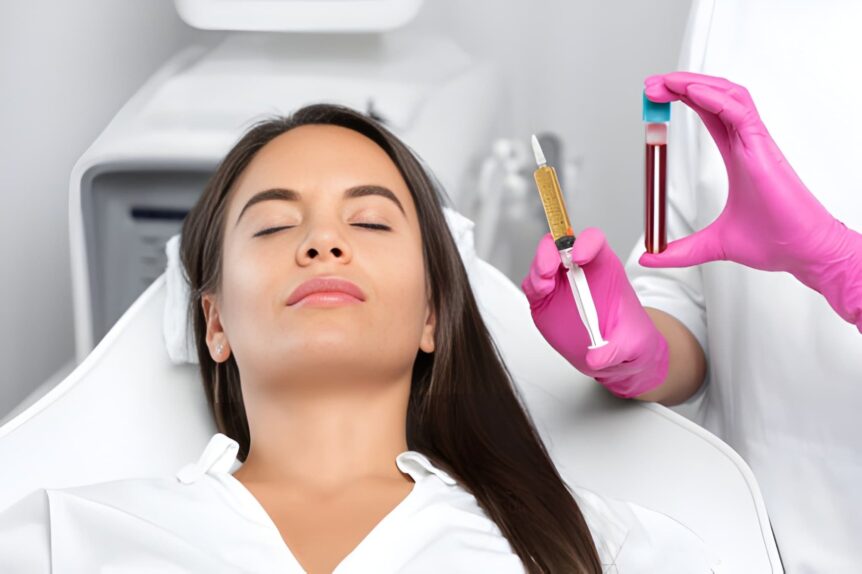
Platelet-rich plasma for skin is a treatment that uses the incredible healing power already concentrated in your own blood to encourage natural rejuvenation. The process involves using a high concentration of your own platelets, which are packed with growth factors. These factors are the key, they signal your skin to repair and rebuild itself from within. This helps you achieve a more youthful appearance without resorting to invasive procedures or synthetic fillers.
What Is Platelet Rich Plasma
Platelet-rich plasma, better known as PRP, is a powerful, concentrated serum created entirely from your own blood. Your blood is made up of a few main players: red cells, white cells, plasma, and platelets. The platelets are the real heroes here. They are tiny, disc-shaped cell fragments famous for their role in clotting and healing wounds.
Think about what happens when you get a cut. Platelets immediately rush to the area to stop the bleeding. But they do much more than just plug the hole. They also release hundreds of proteins known as growth factors. These growth factors are basically your body’s dedicated repair crew, sending powerful signals to get the healing process started.
A PRP treatment works by isolating these platelets and their growth factors from the rest of your blood. We concentrate them to create a potent, golden-colored serum that is many times richer in platelets than regular blood. When we apply this serum to your skin, it delivers a clear message to your cells: it is time to rebuild and rejuvenate.
Harnessing Your Body’s Natural Healing Abilities
The real beauty of using platelet-rich plasma for skin is that it works with your body, not against it. Instead of injecting foreign substances, PRP relies on the biological tools your body already has to kickstart its own regenerative processes.
This approach comes with a few major benefits:
High Biocompatibility: Because the PRP comes from your own body, the risk of allergic reactions or other adverse side effects is extremely low. Your system immediately recognizes the components as its own.
Natural Stimulation: The growth factors in PRP do not artificially plump your skin or freeze your muscles. Instead, they encourage your own skin cells to produce more collagen and elastin, the two key proteins that give your skin its firmness, structure, and bounce.
Targeted Support: The treatment allows us to deliver a high concentration of these restorative signals exactly where you want to see improvement, whether it's fine lines, uneven texture, or acne scars.
The demand for PRP has surged as more people look for natural, minimally invasive ways to enhance their skin. The global platelet-rich plasma market was valued at USD 537.85 million in 2021 and is expected to hit USD 1,426.81 million by 2029, which shows just how popular it is becoming in both dermatology and cosmetics. You can learn more about the diverse applications of PRP therapy and how it treats injuries in our detailed guide.
How PRP Naturally Revitalizes Your Skin
To really get what platelet-rich plasma does for the skin, we have to look deeper than the surface. This is not about a quick, superficial fix. It is about having a biological conversation with your skin cells, encouraging them to act younger again. And it all starts with the incredible power packed inside your own platelets.
Think of platelets as your body's on-call emergency crew. Whenever you get an injury, they are the first ones on the scene. But their job is much bigger than just stopping the bleeding. Their main role is to kick off and manage the entire healing process by releasing a flood of powerful signaling molecules called growth factors.
These growth factors are the real engine behind PRP therapy. When we introduce a concentrated solution of your own platelets back into your skin, it is like sending an elite team of project managers straight to a construction site. Their instructions are clear: rebuild and reinforce the entire area.
The Role of Growth Factors in Skin Renewal
Once they are released, these growth factors start sending out very specific messages to your skin cells. One of the most important cells they talk to are fibroblasts, the tiny factories responsible for producing your skin’s structural proteins.
The growth factors tell these fibroblasts to ramp up production of two critical components:
Collagen: This is the most abundant protein in your skin, giving it fundamental strength, firmness, and structure. As we get older, collagen production naturally slows down, which leads to sagging and wrinkles.
Elastin: This protein is what gives your skin its elasticity, that ability to snap back into place after being stretched. A loss of elastin is what contributes to fine lines and a less supple feel.
By stimulating the creation of fresh collagen and elastin, platelet-rich plasma helps rebuild and strengthen your skin’s underlying support system. This is a gradual, natural process that improves your skin's resilience and smoothness from the inside out.
Improving Blood Flow for a Healthier Glow
Beyond just building new structural proteins, the growth factors in PRP also play a key role in a process called angiogenesis, which is the formation of new blood vessels. Better circulation is absolutely essential for vibrant, healthy-looking skin.
Improved blood flow means a more efficient delivery system for getting oxygen and vital nutrients to your skin cells. At the same time, it helps carry away metabolic waste more effectively. This boost in microcirculation is what creates that healthy, radiant glow many people notice after a series of PRP treatments.
This dual-action approach, rebuilding the structural matrix with collagen while also improving the skin's nutrient supply, is what allows PRP to address multiple concerns at once. It helps improve overall skin texture, soften the appearance of fine lines, and can even support the healing of issues like acne scars by prompting your body to replace damaged tissue with new, healthy cells. To understand more about this revitalizing treatment, you can find additional details on how that platelet-rich plasma treatment for your face works in our guide.
Your PRP Treatment Journey From Start to Finish
If you are thinking about PRP for skin rejuvenation, it is natural to wonder what the process actually involves. Knowing what to expect can make you feel much more confident and prepared. The good news is that the entire journey is quite straightforward and is centered around your comfort and safety, from the first conversation to the final aftercare steps.
Let's walk through each phase so you have a clear picture of how PRP works to bring out your skin's natural vitality.
Step 1: The Initial Consultation and Blood Draw
Your journey starts with a one-on-one consultation with a clinician. This is a crucial first step where you can talk openly about your skin concerns, what you hope to achieve, and ask any questions you have. The clinician will take a look at your skin and confirm whether PRP is a suitable path forward for you.
Once you are ready to begin, the treatment kicks off with a simple blood draw from your arm, much like you would have during a routine check-up. We only need a small sample, usually just a few tablespoons. Because the treatment uses your own biological material, it is an incredibly well-tolerated procedure.
Step 2: Preparing Your Platelet-Rich Plasma
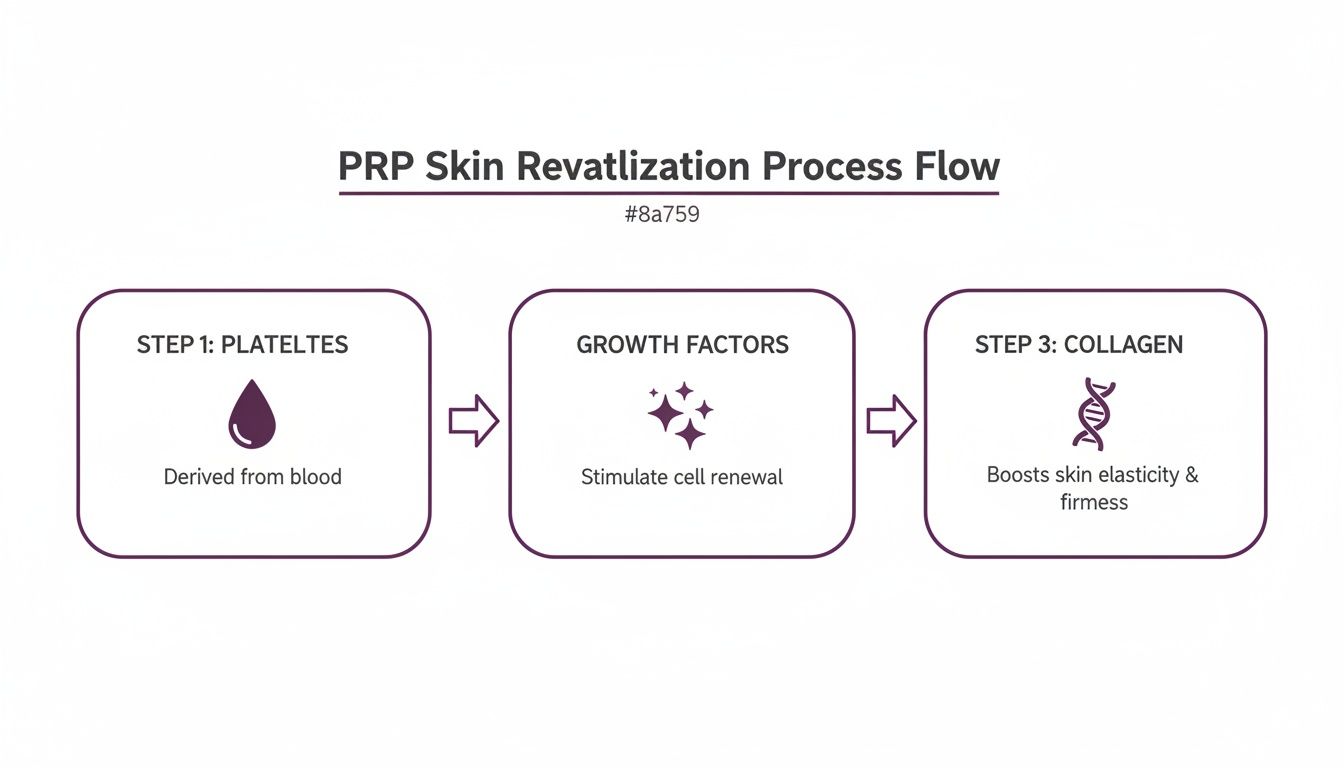
After your blood is drawn, the sample is placed into a highly specialized piece of medical equipment called a centrifuge. This machine spins the blood at an extremely high speed, which carefully separates the different components based on their weight and density.
This spinning process isolates the platelets and their powerful growth factors from the other blood cells. The result is a golden-colored liquid known as platelet-rich plasma, or PRP. This concentrate is packed with a much higher concentration of platelets than your blood normally contains, making it a potent solution for skin regeneration.
This simple flowchart shows how your body's own resources are put to work to rebuild your skin's foundational structure.
Step 3: Applying the PRP to Your Skin
Before the PRP is applied, a topical numbing cream is smoothed over the treatment area to make sure you are completely comfortable. Most patients report feeling very little to nothing during the actual procedure.
Once the area is numb, the clinician will apply the PRP. This is very often paired with microneedling. A microneedling device creates thousands of tiny, controlled micro-channels in your skin. These channels do two important things: they signal your skin’s natural healing response and, just as importantly, they allow the PRP to absorb much more deeply and effectively.
Applying the PRP right after microneedling ensures those valuable growth factors get delivered exactly where they can do the most good, encouraging your body to build fresh, new collagen and elastin from the inside out.
Step 4: Post-Treatment and Aftercare Guidance
Right after your treatment, it is normal for your skin to look pink or slightly reddish, almost like a mild sunburn. This is a great sign. It means your skin’s healing process has officially begun. This redness usually fades significantly within 24 to 48 hours.
Here are a few key aftercare steps you can generally expect:
Avoid Sun Exposure: You will need to be extra diligent about protecting your skin with a high-SPF sunscreen. Your skin will be sensitive, and sun protection is a must.
Use Gentle Skincare: For the first few days, stick to gentle cleansers and moisturizers. Avoid any harsh products, exfoliants, or active ingredients like retinoids.
Stay Hydrated: Drinking plenty of water is always good for your skin, but it is especially helpful in supporting your body's healing and recovery processes.
PRP Treatment Timeline
To give you an even clearer idea, here is a simple breakdown of what to expect from your PRP skin rejuvenation journey.
| Phase | What Happens | Typical Duration |
|---|---|---|
| Consultation & Prep | Discuss goals, skin assessment, and apply topical numbing cream. | 30–45 minutes |
| Blood Draw & PRP Prep | A small blood sample is taken and spun in a centrifuge to isolate the PRP. | 15–20 minutes |
| PRP Application | Microneedling is performed, followed by the application of the concentrated PRP. | 30–45 minutes |
| Initial Recovery | Skin appears red or pink, similar to a mild sunburn. | 24–48 hours |
| Continued Healing | Redness subsides; skin begins the internal collagen-building process. | First 1–2 weeks |
| Visible Results | Skin texture, tone, and firmness gradually improve as new collagen forms. | 4–6 weeks onward |
This table outlines the general flow, but your clinician will provide a timeline tailored specifically to your skin and treatment plan.
The entire patient experience is designed for clarity and comfort. For a more detailed look at our clinic's protocols, you can learn more about what to expect when you visit an ICBR clinic. By sticking to a simple aftercare plan, you can help your skin get the full benefit of the powerful regenerative signals sent by your PRP.
The Benefits and Realistic Outcomes of PRP
When you are considering platelet-rich plasma for your skin, it is important to understand both its powerful benefits and its natural, gradual timeline. PRP is not an overnight fix. Instead, it is a sophisticated treatment designed to work with your body’s own healing abilities, leading to improvements that are both subtle and significant.
The main goal of PRP is to support your skin's overall health and appearance from the inside out. In the weeks and months after a treatment, many patients report a range of positive changes as their skin starts producing new collagen and elastin. These improvements build on each other, creating a refreshed, more youthful look over time.
Key Improvements Patients Can Expect
One of the first things people notice is a visible improvement in skin texture. Patients often say their skin feels smoother and softer to the touch. This is a direct result of new collagen growth, which helps rebuild and strengthen your skin's underlying structure.
Another major benefit is a more even skin tone. The growth factors in PRP can help fade the appearance of sun damage and other minor discolorations, leading to a brighter, more uniform complexion. This creates a healthy, radiant glow that looks completely natural.
PRP is also effective at addressing the early signs of aging.
Reduced Appearance of Fine Lines: By supporting collagen and elastin, PRP helps plump the skin from within, softening the look of fine lines, especially around the eyes and mouth.
Improved Firmness: As your skin forms new structural proteins, it regains some of its youthful firmness and bounce, helping to counteract mild sagging.
Noticeable Improvement in Scars: PRP can be particularly helpful for those with acne scars or other texture issues. It encourages the remodeling of old scar tissue, replacing it with new, healthy cells for a smoother surface.
Some studies have supported these observations. For example, some research has shown that intradermal PRP injections significantly improved wrinkle scores over several weeks. Other studies have found that when PRP was combined with laser treatments for acne scars, it supported healing and led to better scar improvement after a few months.
Longevity and Maintenance for Lasting Results
How long your PRP results last can vary depending on your age, lifestyle, and skin condition. Typically, the benefits can last for many months, often up to a year or even longer. But since the aging process does not stop, a smart maintenance plan is key to long-term success.
To get the best possible outcome, clinicians usually recommend an initial series of treatments.
Initial Phase: A series of 2-3 treatments, spaced about 4-6 weeks apart, is often suggested to build a strong collagen foundation.
Maintenance Phase: To keep your results going, periodic maintenance sessions, often once or twice a year, are highly beneficial.
Think of PRP as a long-term investment in your skin’s health. By supporting your body’s natural anti-aging mechanisms, you can achieve authentic, lasting rejuvenation. For a deeper look into its restorative effects, you might find our article on how PRP helps with anti-aging helpful.
Is PRP the Right Choice for Your Skin?
Figuring out which skin treatment is right for you is a personal decision, and it is important to know which one truly aligns with your goals. Platelet-rich plasma for skin is a fantastic option if you are looking for natural, gradual improvements in your skin’s quality, not dramatic, overnight changes. Think of it as a supportive therapy that encourages your body to do what it does best: heal and rebuild.
The best candidate for PRP is someone who wants to get ahead of the early signs of aging or tackle specific textural concerns. Because this treatment uses your body's own biological resources, it creates subtle yet meaningful results that help you look refreshed and revitalized, never "done."
Who Benefits Most from PRP
PRP is especially well-suited for people who are just starting to notice changes in their skin’s vitality and want a proactive, non-surgical solution. It is highly effective for several common concerns.
Early Signs of Aging: If you are seeing fine lines, a slight loss of firmness, or a general dullness in your complexion, PRP can help restore a more youthful appearance by kickstarting new collagen production.
Textural Irregularities: For those dealing with uneven skin texture, enlarged pores, or mild acne scarring, PRP supports the creation of smoother, healthier-looking skin from the inside out.
Sun Damage: The treatment can also help improve overall skin tone and reduce the look of mild discoloration from years of sun exposure, leading to a brighter, more even complexion.
When Another Approach Might Be Better
While PRP offers incredible benefits, it is important to have realistic expectations. It is not designed to provide the immediate volume you get from dermal fillers or the dramatic lift of a surgical facelift. For that reason, it might not be the first recommendation for someone with deep-set wrinkles, significant skin laxity, or advanced volume loss.
Additionally, certain medical conditions like blood-clotting disorders or active skin infections might make someone an unsuitable candidate. This is exactly why a professional consultation is a non-negotiable first step in the process. This information is for educational purposes only and is not a substitute for advice from your own physician.
Your Personalized Consultation Is Key
Ultimately, the only way to know for sure if platelet-rich plasma for skin is right for you is to have a direct conversation with a qualified clinician. During a consultation at ICBR, we will sit down and discuss your unique skin concerns, aesthetic goals, and medical history to create a plan that is tailored to you.
This conversation is all about empowering you to make a confident and informed decision. It ensures that whatever therapy you choose is perfectly aligned with your needs, setting the stage for the best possible outcome on your journey to natural skin rejuvenation. We invite you to schedule a discussion with our team to explore your options.
Combining PRP with Other Regenerative Therapies
To get truly remarkable and lasting results, platelet-rich plasma is often at its best when it is part of a bigger, smarter rejuvenation strategy. While PRP is a powerful tool on its own for improving skin in specific areas, its effects can be beautifully amplified when paired with other supportive therapies. This layered approach allows us to address wellness on multiple levels, from deep systemic support to targeted surface renewal.
At ICBR, we see anti-aging as a comprehensive process. This is why we often suggest combining treatments to create a synergistic effect, where the whole is greater than the sum of its parts. For example, pairing platelet-rich plasma for skin with professional facial peels can deliver exceptional results. The peel works to exfoliate the dull, outer layers of skin, clearing the way for the PRP to work more effectively on the fresh, new skin underneath.
The reliability of PRP as a partner therapy is backed by its prominence in the medical aesthetics market. Dermatology's dominance in the platelet-rich plasma sector highlights its recognized value for skin-focused treatments. Studies have shown PRP can match other rejuvenation techniques for improving skin texture and tone, often with fewer side effects. You can discover more insights about the growing PRP market on polarismarketresearch.com.
By creating a customized, multi-faceted program, we can help you achieve natural-looking results that reflect your inner vitality.
Your PRP Questions, Answered
How Long Do PRP Results Last?
The longevity of your PRP results really depends on you: your age, your skin’s current condition, and even your lifestyle habits play a big role. Generally speaking, though, most people enjoy the benefits for many months.
To keep your skin looking firm and feeling smooth, we usually recommend periodic follow-up treatments. Think of them as maintenance sessions that help prolong the positive effects and keep your skin’s natural collagen production humming along for the long term.
Is the PRP Procedure Painful?
Your comfort is our top priority. Before the treatment even begins, we apply a topical numbing cream to the skin to minimize any sensation you might feel.
Because of this, most patients report feeling very little during the PRP application. Some describe it as a slight pinching or a faint tingling, but it is widely considered very tolerable. Our clinicians are with you every step of the way to make sure you are comfortable throughout the entire process.
Because PRP uses your body's own biological material and is minimally invasive, it is one of the most well-tolerated skin rejuvenation treatments out there. The focus is on a gentle process that delivers natural-looking results.
How Many PRP Sessions Will I Need?
The ideal number of sessions is unique to you and what you want to achieve with your skin. For the very best results, we find that a structured initial treatment plan is the most effective way to go.
This usually means a series of 2 to 3 treatments, with each session spaced about 4 to 6 weeks apart. This schedule gives your skin plenty of time to respond to the growth factors and build new collagen between appointments. After this initial series, we often suggest maintenance sessions once or twice a year to preserve your results. Your clinician will map out a personalized plan with you during your consultation.
Are There Any Side Effects with PRP?
One of the biggest advantages of using platelet-rich plasma for skin is its incredible safety profile. Since the treatment uses a concentrate made from your own blood, the risk of an allergic reaction or any other negative response is extremely low.
The most common side effects are minor, temporary, and stay right in the treatment area. These can include:
Mild redness, almost like a light sunburn
Slight swelling or tenderness to the touch
A little bit of bruising at the application sites
These effects typically clear up on their own within just a few days. Following the aftercare instructions we provide will help ensure a smooth and quick recovery, letting you get back to enjoying your refreshed, glowing skin.
At the International Clinic of Biological Regeneration, we are dedicated to helping you achieve your wellness goals with personalized, supportive therapies. To learn more about how our rejuvenation programs can help you look and feel your absolute best, we invite you to explore our unique approach.